Thursday, 9 November 2006

We are not being told the half of it

Following on from the report on this blog of the death of the British soldier from the 2nd Battalion, Duke of Lancaster's Regiment, who died after an attack on the Old State Building in Basra, the soldier has been officially named as Kingsman Jamie Hancock, aged only 19 and on his first active tour.

Amongst others, that information found its way into The Daily Telegraph both online and print copy, with the by-line of James Burleigh, in what was almost a straight copy-out of the MoD press release.

The choice of Burleigh to front the piece is not particularly odd. As a journeyman hack, he turns his hand to a variety of stories and occasionally writes defence pieces. However, the Telegraph also got its defence correspondent, Thomas Harding, to write a piece on the death of Kingsman Hancock. And, while readers will be aware, I am no fan of Harding, it was actually highly informative.

Now what is really odd is that, not only did the piece not appear in the print edition, it appeared only very briefly on-line before disappearing and, currently, can no longer be found on the paper's own search engine. Under a subject search, it is the Burleigh piece that comes up.

Turning to the Harding story, not only is it informative, it also effectively contradicts the official Army spokesman, Major Charlie Burbridge, who originally told Sky News: "There were bursts of automatic fire, which is an indication that this was not a sniper … These are individual rogue elements of criminal gangs and militias who target our soldiers."

Writes Harding of the dead soldier, he was guarding a British base in the centre of Basra when a sandbagged watchtower (sangar) came under attack from automatic weapon fire. Despite wearing the new Osprey body armour and being protected inside the fortified sangar … he died within minutes as a result of his wounds.

Hancock's company, we learn from Harding, is stationed at one of the most dangerous locations for troops in the centre of Basra, the Old State Building where 200 British soldiers are based. He tells us:

The building comes under attack from rocket propelled grenade and automatic gunfire three or four times every 24 hours with the attacks usually occurring at night. During a recent spate of RPG attacks the 2Bn The Royal Anglians used snipers hidden in rooftops to kill 10 gunmen over a two week period. It is believed that the insurgents use the building to "blood" young terrorists by testing their ability and courage. If the recruits pass then they are offered positions on mortar teams earning up to $300 a firing – the equivalent of almost six month's wages.
I tracked down some photographs of the Old State Building and assembled them into the composite below. The first line shows the roof of the building, with a "sangar" being built (and completed), the second line shows the highly fortified perimeter and the third line shows views from the roof, in which some of the fortifications can be seen.


To the story in general, Major Burbridge adds that:

The incident involved a series of bursts from automatic gunfire in an attack carried out by one or more gunmen … The solder guarding the sangar was injured by the gunshots and died within a few minutes. We did not catch the gunmen as they did not hang around after the incident. They fired off a few bursts and then disappeared. It is believed AK47 assault rifles were used in the attack that was probably carried out from a window or building overlooking the British base.
With what we wrote in our earlier piece, this really does not convey the impression that the situation in Basra is under control – far from it, with the insurgents able to attack at will a highly fortified British base, heedless of losses. There is a serious war going on out there and we are not being told the half of it.

COMMENT THREAD

Tuesday, 7 November 2006

Tipping points

Few of us are under any illusions about the inadequacies of the media but, even then, it comes as a shock to realise quite how badly we are served.

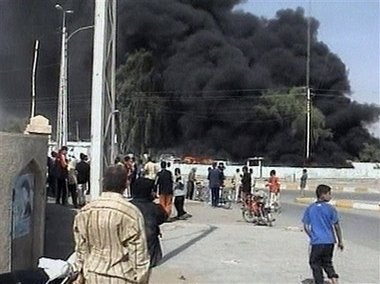
That comes today with the news of yet another soldier killed in Basra, bringing to 121 the number of British casualties in Iraq since the invasion in March 2003.

The sad news, but now distressingly common, is accompanied by minimal details. The soldier was from the 2nd Battalion, Duke of Lancaster's Regiment, who died after the Old State Building - a coalition base in central Basra city - came under small arms fire.

Army spokesman Major Charlie Burbridge, who is increasingly taking on some of the characteristics of Saddam Hussein's Minister of Information, informs us that the soldier was killed while on sentry duty. "There were bursts of automatic fire, which is an indication that this was not a sniper," he told Sky News. "These are individual rogue elements of criminal gangs and militias who target our soldiers."

It may be a complete coincidence that last week saw men from the Duke of Lancaster's Regiment on trial for abusing Iraqi prisoners but, whatever the reason for the shooting, this does not seem to be an action by "individual rogue elements", as Burbridge claims.

Last Thursday, we got a flavour of how bad it was getting in Basra from Thomas Harding of the Telegraph, also with comment that "Operation Sinbad" was stirring up a hornet's nest. But what we did not get was any idea that the Army was losing control of the city. That we had to deduce for ourselves, relying largely on other sources, one of which today gives us important additional information.

Amazingly, this is from a website called Newslab, which turns out to be a Siberian-based operation. The "News laboratory" portal, we are told, is a project of Krasnoyarsk "Informburo" news agency, which was launched on January, 28 in 2003. It includes news from Siberian Region, feature articles and reference information which is interesting to Territory residents.

Yet it is from this source – not the British media or our own government – we learn that on the Friday, the day after Thomas Harding's breathless report, about British troops being mortared in Basra Palace, four Russian technicians working on the reconstruction of al-Najibiya power plant in Basra were injured by a mortar strike.

Crucially, we also learn that the bomb "accidentally" hit the power plant and that the real object of the strike was "UK Armed Forces". The same report also tells us that earlier, a "Russian energy specialist" was killed and six more workers, including three Russians, were wounded.

That a British soldier today was regrettably killed, therefore, seems only an accident of history – we could have had such a report last Friday. The death or injury of Russian or other nationality workers, though, is not worthy of a report in the British media.

Also not worthy of the British media is a report about “provocative” British tactics, datelined 5 November by a local media agency. It records a "strong protest" by the Basra provincial council over recent actions by "British occupation troops".

The council's deputy chairman, Jassem al-Abadi, described British troops' conduct as "provocative and unjustified," and was particularly critical of the treatment of Iraqi security forces in the city. He said on one occasion the troops forced Iraqi police officers to dismount their vehicles as they were on their way to check "a suspicious item" under one of the bridges. Says al-Abadi:

The (British) troops compelled Iraqi forces to surrender their weapons, ordered them to lie down on the ground and put their boots over their heads. This is a heinous practice that is insulting to all the citizens and not only to the police officers involved.
According to the report, Abadi warned the troops not to repeat such practices in the future. "If they do, the masses will teach them a lesson this time," he said, declaring that the people of Basra were "angry and furious" over the troops' practices.

Abadi also accused British occupation troops of attacking the headquarters of al-Fadhila party, one of the most influential factions in the city. Fadhila is powerful in Basra and its supporters and armed men are reported to be wielding immense influence in the city. "These provocations are unacceptable and we warn British troops not to repeat them otherwise the people’s reaction will be beyond control," he said.

There may well be special pleading here, and the source is hardly impartial. Not least there have been persistent reports of Iraqi police siding with the militias and insurgents, assisting them to attack British troops, so they can hardly expect an easy ride. But the very nature of the report indicates that things are far from under control in Basra and may well explain why, today, we are hearing of another British casualty.

None of this, though, we are going to hear from our own media. The major effort, as always, is in Baghdad, from where the BBC makes its most recent report, while the likes of the The Guardian is more interested in pushing its own agenda, its story for today recounting how: "Dead Soldiers' Kin Seek Inquiry Into War".

Even where they do pick up some nuggets, the analysis simply is not there, for instance in a report in The Scotsman about the death of Lance Corporal Allan Douglas. He was killed by a sniper's bullet in the Maysan province in January, the 99th British casualty of the war. One of his contemporaries describes their role in Iraq as "driving around until they were shot at".

This brings to mind the piece we wrote in June last reporting the observations in a House of Lords debate of the Viscount Brookeborough. "We seem to be providing ourselves as a target," said the Viscount, recalling his experiences in Northern Ireland, and calling for more helicopters in Iraq. But that was not reported by the media either.

Thus, when last week we saw the claim recorded by the stupid Thomas Harding that southern Iraq was at a "tipping point", we could hardly agree. It is more like already lost. Thus, we might say that it is the media coverage that is at the tipping point, although the indications are that it has actually passed over the edge and is on the slide downwards.

COMMENT THREAD

Sunday, 5 November 2006

What will we have gained?

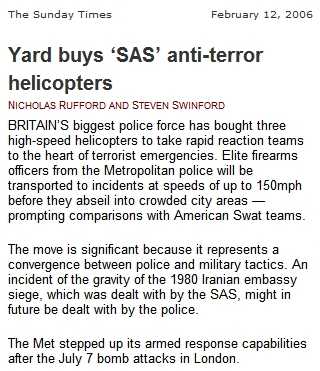
Not only the content but the date also of this article in the Sunday Times is relevant. Written February last, it confirms the view that security forces cannot deal effectively with terrorism without the use of modern, properly equipped helicopters.

Thus does this newspaper record that London's Metropolitan Police has bought three high-speed helicopters (Eurocopter EC 145s) to take rapid reaction teams to the heart of terrorist emergencies - just the sort of thing that would be ideal to deal with the hit and run mortar teams that are causing such havoc in Basra.

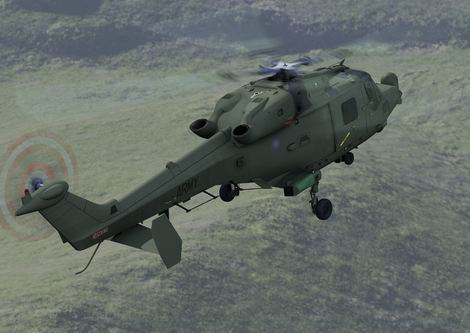
To provide 24-hour coverage of the city and environs in an insurgency situation, however, you would probably need about 12 helicopters, the number shown below. That represents less than a third of the fleet operated by the British police and twice the number of tactical helicopters operated by the Army in the whole of southern Iraq. It also represents just over half the price of one Eurofighter or Apache attack helicopter, either of which cost around £60 million each - and one tenth the cost of the failed Phoenix UAV programme.


The point is not lost on American Thinker, with James Lewis picking up the report that a Catholic bishop has entered the news by insisting that it is "morally reprehensible" to fail to equip British troops properly – something we also discuss on the blog.

Of the MSM though, only Booker sees the point. Picking up on our posts here, here, here and here, he writes in his Sunday Telegraph column today, adding his own distinctive touch to the argument:

Nothing should have brought home more chillingly the failure of our military presence in Iraq than the fact that last week we had to evacuate all our 200 civilian officials from the Basra Palace complex, refurbished at a cost of £14 million (including an upgrade of the swimming pool) to enable them to bring the area peace and democracy. Saddam's former palace is also the British Army's headquarters, and it is a measure of its impotence that it can no longer defend its own HQ against insurgent mortar attacks.

To do so would require a combination of counter-battery radar equipment, to detect where the bombs are coming from, with helicopters on patrol to provide the necessary instant response. We have the radar, the Mamba, but the Ministry of Defence has not seen fit to provide our troops with the helicopters. In the whole of Iraq we have only six Lynxes, used for a range of roles, not including protection of the army's headquarters, which is why our command staff have to spend much of their time hiding under tables from 15 or more mortar attacks a day.

The MoD does plan to buy 70 "Super Lynxes", at £14 million each. But these will not be available until 2012, to help us play our part in the European Rapid Reaction Force (ERRF). Meanwhile the US Army in Iraq buys off-the-shelf commercial helicopters at less than £4 million each, to play precisely the supportive role our own troops are so desperately in need of, in the real war they are engaged in; while the MoD pays nearly four times as much for machines to equip our men to take part in some fantasy army of the future.
Booker then refers to this blog and points out that Britain's police forces are now better equipped with helicopters than the British Army. "It is hardly surprising", he concludes, "that it can no longer even defend its own headquarters." He believes the lack of interest in ensuring that the Army can do the job is a precursor to Blair pulling out of Iraq altogether. My co-editor posits that it is a cock-up, while American Thinker writes of a "cultural conspiracy" in the sense that the Left has controlled the British media, educational system and much of its politics for almost a century:

The British Left isn't nationalist, but internationalist. Undermining the armed forces by propaganda and funding cuts is a basic part of the socialist faith: "no troops, no war" is the reasoning, if one can call it that. You don't need conspirators when it is done every day by the BBC, the Guardian, and much of the Labour and Liberal Democrat Parties.
Whatever the reasons, and American Thinker has more, we are observing an Army that is being undermined through lack of equipment. The lack of response to that had us worried, to the extent that we had to do a reality-check, concerned that we might be trapped in a private fantasy.

But we are not wrong. Without the kit – in this case the helicopters – the Army simply cannot perform, for want of which performance, Iraq must eventually be lost. And, writes Charles Moore, "If we do pull all our troops out, mock Blair and Bush, and hail some deal with Iran as "peace", we shall have a few weeks of self-congratulation, but that is all."

COMMENT THREAD

Cost-effective defence

Lewis Page, the man who brought us the book Lions, Donkeys and Dinosaurs - tabulating some of the MoD's procurement scandals – has done it again.

For the ERC, (Economic Research Council), he has produced a paper entitled "Cost-Effective Defence". It details how, in his view, the UK could radically reorganise its Armed Forces within the existing budget to finally move them beyond their redundant Cold War footing.

He explains in detail what equipment and capabilities needs to be bought and discarded and how funds can be found for a fifty percent pay rise for combat troops. He believes that the correct level of pay for a private is about £22,000 - which is still less than a policeman or firefighter. This, he writes, "can be paid for within the existing budget by cutting back on the Eurofighter and other pointless procurement projects whilst still retaining funds to buy the equipment and capabilities our armed forces actually need."

The ERC, which claims to be Britain's oldest economics-based think-tank, founded in 1943, is to be commended for publishing the work. There is little enough being done to provoke a debate about the nature and structure of our armed forces and, if it encourages a few pieces in the media, that could be helpful.

What is particularly useful is Page's initial analysis of the central defects of our defence effort. The problem is that our armed forces are likely to face three types of opposing forces: what he calls "paramilitaries" (i.e., insurgents); the armed forces of minor powers; and the armed forces of nuclear powers. The last is extremely unlikely, the second happens every ten years and the first continuously since 1945. But, he notes, the UK's military capabilities reflect the reverse of these facts.

Page thus argues that insufficient effort is being made in the provision of deployable ground combat troops with a small logistical footprint, utility and transport helicopters, both heavy and light military air transports, sea-based aviation of every type and "recruitment and retention of suitable junior servicemen and women."

But, he declares, giving the MoD more money would be unwise and merely continue present duplication of effort and "overextension into foolish areas" to persist. A radical reorientation of existing resources is required first.
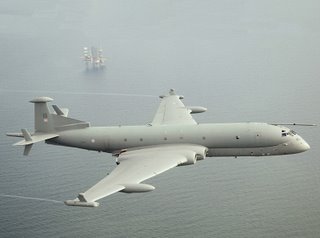
We would, as you can imagine, completely endorse Page's view on this. More cash to the MoD as presently constituted would simply be throwing more money after bad. And Page offers plenty of detail as to where the axe would fall – not least on the Eurofighter Tranche 3 (the ground attack version), the Nimrod MR4 maritime patrol project, a halt to the Type 45 building after six ships (which will probably happen anyway) and reducing the Royal Navy frigate and destroyer fleet to 14 ships.
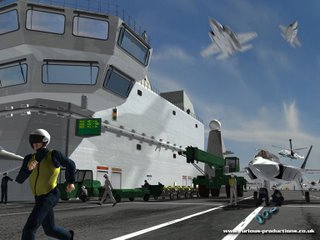
In fact, reflecting his previous experience as a Royal Navy officer, Page is savage on grey floating "toys", although he wants more amphibious warfare ships and the two carriers (preferably reconfigured for conventional take-off and landing). Overall, he thinks he can save £20-25 billion from the proposed procurement budget, all of which he would use to improve pay and conditions, with a starting salary for privates and equivalents to be at least £22,000, especially for combat troops.

We do not entirely agree with his emphasis on paying privates more and, if anything, it seems that within the services, this is not the main issue. Furthermore, with the current overseas bonus, it must be even less of an issue than it was.
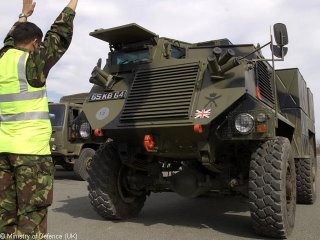
This though is not the only area where Page's arguments start to unravel. When it comes to green "toys", he is clearly out of his depth. That is not to say that a former naval person cannot acquire considerable expertise in army equipment and land warfare, but you have to put the work in – which Page does not seem to have done. Little things, as well as big, betray him. In the former category, he seems to be unaware that the Saxon APC has been junked and that the Phoenix UAV has been withdrawn from service.

Page's biggest problem though is in dealing with the issue which we promised we would address in an earlier piece - the vitally important issue of how, in counterinsurgency operations, you bring the battle to the enemy.
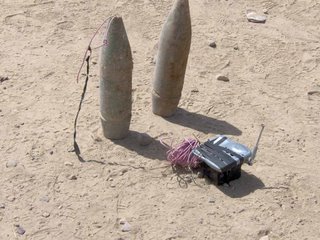
Here – as in all military procurement – one should not be defining the equipment so much as the tasks, and then designing the equipment to allow your people to carry them out. In that earlier piece we already set out the need to protect your own personnel. In the context of the IED having become the insurgents' main weapon, from that has evolved a range of mine/blast protected vehicles, the design principles of which are very different from those of "conventional" armoured vehicles.
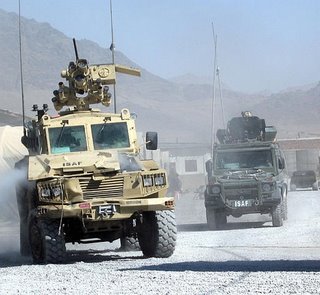
This is Page's first error, in that he fails completely to recognise the need for these, the need for patrol vehicles that give better protection than the "Snatch" Land Rovers and other lightly armoured vehicles.

His second error – one which the Army also makes – is failing to realise that dealing with IEDs must be carried out on a proactive as well as reactive basis. The Americans – for all their other mistakes – have understood this, with the formation of their IED-hunting teams and their requirement for specialist equipment.

Interestingly, the NAO Report points out that shortfalls in recruitment/retention are patchy and one of the key shortages is in bomb disposal officers – an area where the British Army is singularly badly equipped.

However, if protecting your own people through passive and active defences formed the first unbreakable principle - the need to minimise "unnecessary" deaths - the second rests on the need to make a "promise" to the insurgents. The first says, effectively, if you try to kill us you will fail; the second says, if you try, you will die.
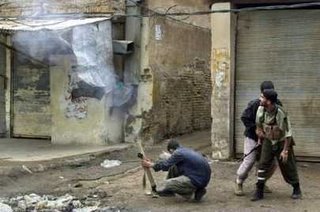
The reality of an insurgency though is that the enemy is invisible until he reveals himself and is identifiable only for so long as he engages – merging back into the environment to become invisible again. To the question, "how do you kill an insurgent?" therefore, the answer is "very quickly" - or not at all. Most often, you have a fleeting "target of opportunity" and your equipment must be geared to maximising the chances of a "kill" in time afforded.

Some of this is old technology – intelligence-led ambushes and the use of long-range, pre-positioned snipers who take out the enemy when he appears. But where, for instance, you get the hit-and-run mortar team, new technology is vital. We have already spelt this out in terms of needing accurate counter battery radar, UAVs to carry out routine surveillance, plus light helicopters that can carry out surveillance functions, which can mount attacks and which can deliver rapid response ground teams.
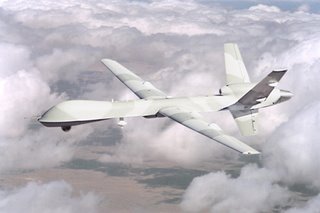
But what are also proving extremely valuable are Unmanned Aerial Combat Vehicles (UCAVs). The later models such as the Predator B – now renamed the Reaper – are able to deliver a variety of munitions including laser/GPS guided bombs, and up to 14 Hellfire anti-vehicle/personnel guided missiles. With their advanced surveillance capabilities, these, above all, seem to hold out the most promise of being able to deliver an instant and deadly response to the fleeting insurgent. We have already seen many examples of their utility.

But here, as with the other equipment issues, Page does not seem to be on the same planet. He makes no provision for re-equipping the Army with blast protected vehicles or supplying it with large numbers of light attack/reconnaissance helicopters. Furthermore, he costs only for the Watchkeeper in his UAV programme, with no provision for UCAVs. Yet these essential additions would absorb a considerable portion of his expected savings and that is without even considering the extremely expensive enhancements in satellite communications capabilities needed to operate an extensive number of UAVs.

In this 40-page paper, though, you would expect that there are many other ideas, and indeed there are. Another major suggestion from Page is the total abolition of tank regiments, which he argues should re-role as armoured infantry, switching from Challengers to Warriors, while the existing mechanised infantry would convert to light infantry.
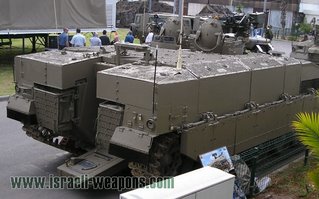
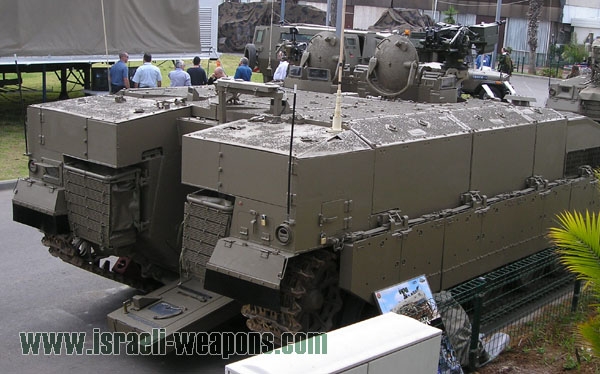
Yet this ignores completely the experience of an increasing number of armies, from the Americans to the Israelis – and now the Canadians, all of whom are reconsidering the role of heavy armour in counterinsurgency operations. The Israelis are even considering moving away from lightly armoured personnel carriers to the heavy Namera APCs, based on the Merkava MBT.

Strangely though, where there is room for significant financial savings – such as in abandoning the FRES programme – which Page clearly does not understand – he comes up with no recommendations. And, despite the extraordinary cost of the Future Lynx programme, this is allowed to stand.

All of this makes for an extraordinarily shallow paper, which offers very little* that can be treated as a serious contribution to defence strategy. Nevertheless, up front, I did commend the Economic Research Council for publishing the paper – as a contribution to the debate - and stand by that. I wish, though, the Council had been a little more aggressive in testing the arguments of its author before going public.

* Originally, I wrote "nothing" but, on reflection, that is a little too severe. There are some good ideas in the paper, albeit very few.

COMMENT THREAD

Thursday, 2 November 2006

All we hear is silence

Take a very stupid man, dress him up in a blue flak jacket, and send him to Basra to work for The Daily Telegraph as its defence correspondent and you still have a very stupid man. All you are going to get out of him is very stupid journalism.

This particular piece by Thomas Harding is headed, "Southern Iraq approaches the tipping point" but today the Telegraph excels itself by adding another stupid piece written by this blog's favourite village idiot, none other than Boris Johnson. Between the pair of them, they typify all that is wrong with modern journalism and demonstrate why we are not going to sort ourselves out until morons like this are no longer given space to air their vacuous views.

We need not detain ourselves with Johnson at the moment. In a truly vacuous piece, he informs us that we have already lost the battle – heedless of the fact that it is still in the balance. That is left to the brainless Harding to evaluate and he starts his piece with a bit of lurid prose:

Sheltering under a table on the dining room floor of Basra Palace with 200 soldiers, seconds after a mortar round had been 10ft away from penetrating the roof and causing carnage, it would have been difficult to argue that the British Army was making progress in Iraq…

… From dawn till dusk we had been rocketed or mortared 15 times in Basra Palace — one of the two main British barracks in the southern Iraq capital. There was the usual fear and thrill of coming under enemy fire but that was just for 12 hours and by the evening the novelty was beginning to tire.
Harding actually uses this as a launch pad to argue, as his title implies, that southern Iraq is at a "tipping point" with everything being staked on the Army's "Operation Sinbad", and that it could go either way – towards partition and bloody ethnic cleansing or a new "Dubai", a beacon of hope for the rest of the country.

That is actually as far as need to go for, right up front – without Harding even beginning to understand it – is the very reason that "Operation Sinbad" is failing and is going to end up in failure. If the Army cannot even secure its own headquarters, and is suffering continued mortar attacks of the nature described by Harding – having already deserted its bases at Abu Naji for the same reason – while civilians are being evacuated from Basra Palace, then this is not an organisation which has the situation under control. It has no credibility and is not going to succeed.

Think about it. This is not rocket science. If the Army cannot even secure its own headquarters, the chances of it securing the rest of the province is exactly nil. As soon as it walks away, the militias will take over.

Turning it round, we are continuing to struggle to find reasons why this problem is not dealt with. As we have pointed out, responding to mortar attacks is not technically difficult.

In the first instance, the Army needs counter-battery radar but, as we have, already established, this equipment is available in the form of the Mamba, and it works. If this is not sufficient, then there is also Cobra (illustrated), bought recently at great expense.

With this equipment, we know that a mortar can be detected within seconds of it being fired, before its first bomb has landed. As we also know, though, a team can be away within minutes, long before a ground patrol can arrive at the firing point. Therefore, it should go without saying that, at the very least, we need helicopters. Unmanned aerial vehicles would be nice – and more economic - but not absolutely essential. But without helicopters, there is no game.

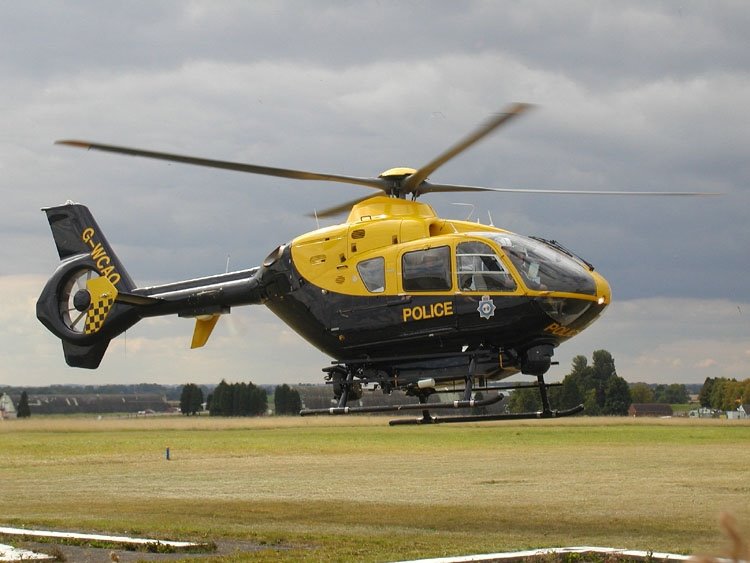
Now, in the UK, there are only three of the 40 police forces that do not have helicopters. Even Surrey, with an area of 1,663 square kilometers, has its own machine, like the one illustrated here. And there – as far as we know – there is no shooting war. The Constabulary enjoys one of the lowest crime rates in England.

Yet, in Basra province, the Army is supposed to support police functions and suppress an insurgency in an area of 19,070 square kilometers – more than ten times the size of Surrey, with an estimated population of about 2,600,000 people. To do that, it has available to it a mere six Lynx helicopters, which also have to carry out multiple other functions. In effect, the Army is being asked to do a job with less equivalent resource than the chief constable of Surrey.

This brings us back to Boris Johnson. As we have pointed out before – and as he keeps reminding us – he is a Member of Parliament. And while some doubtless will be entertained by his vacuous outpourings, I cannot find any trace of evidence that suggests that he has ever explored the technical issues involved in fighting and defeating an insurgency.

Instead of mouthing off, is that not what he should have been doing? As it is, with his demonstrable lack of knowledge, who is he to pontificate on whether we have won or lost?

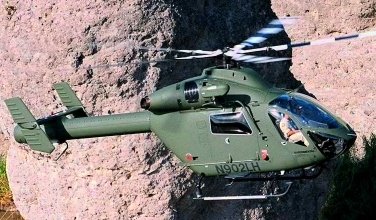
But that leaves us with the ultimate puzzle. Although it is not possible to say that, with the right number of helicopters, the insurgency in southern Iraq can be defeated, there can be no doubt at all that, without them, it cannot. And, at current rates, £4 million buys you a state-of-the art MD Explorer (illustrated) or equivalent, equipped with the very latest in surveillance equipment. All you have to do is paint it green.

The puzzle is: where is the clamour? Where is the media – the likes of Thomas Harding? Where are the Parliamentarians – the likes of Boris Johnson? And where, for that matter, is the blogosphere? On this substantive issue, all we hear is silence.

COMMENT THREAD

Wednesday, 1 November 2006

God is on our side!

Would you send them out in this?Well, a Roman Catholic bishop – which amounts to the same thing, I suppose.

Taking time off from plotting the expansion of the European Union – and no doubt from working on his plans for the European Rapid Reaction Force - the Rt Rev Tom Burns, the catholic bishop of the forces, warned the government yesterday that it was "morally reprehensible" to fail to provide British troops in Iraq and Afghanistan with proper equipment.

This is according to The Daily Telegraph which cites the bishop as saying that British servicemen and women had a "right" to be adequately armed, supplied and reinforced.

Burns's comments have also been included in a letter to be sent to all catholics in the forces to mark Remembrance Sunday, and comes after military personnel and their families had expressed their concerns to him. He writes that troops had to be re-assured they were valued and to know "none of their superiors will ever lack the moral fibre to stand by them".

"Force strengths have to be sufficient; strategies realistic; supplies adequate; equipment appropriate, and apparel proper to the task in hand," he wrote. "Delay has no excuse. All improvements are welcome. These things are owed to our servicemen and women as of right. They are inherent parts of the job that they are asked to do. Anything less risks lives and is morally reprehensible."

According to the Telegraph's story, servicemen and women are understood to have told the bishop they often have worse equipment than colleagues from other countries and do not have sufficient numbers to counter insurgents in Iraq and Afghanistan.

The bishop's intervention is good news and re-states a very simple principle. Basically, where we as a nation (whether we agree with it or not) send men and women out to die for us in a war, we are morally bound to ensure that they are properly equipped.

Furthermore, since members of our armed forces are limited in their freedom of speech and do not have the right to pick and choose their orders, they are not in a position to argue the case for more and better equipment. It is thus incumbent on the media and Parliament to fight for them and to ensure the government does look after our people on the front line.

What is happening though is that both the media and Parliament are doing a poor job – the Telegraph itself illustrating its own inadequacy in the very article it publishes about the bishop. Written by Jonathan Petre, the religion correspondent, and George Jones, the political editor, they say:

The number of British troops killed in Iraq since March 2003 reached 120 last Friday and they include at least 20 who have been died while on patrol in softly-armoured Land Rovers, or "snatch vehicles", which cannot withstand blasts from increasingly sophisticated bombs.

Des Browne, the Defence Secretary, has announced that 300 tougher armoured vehicles will be purchased for use in Iraq and Afghanistan but they will not be available until the end of the year…
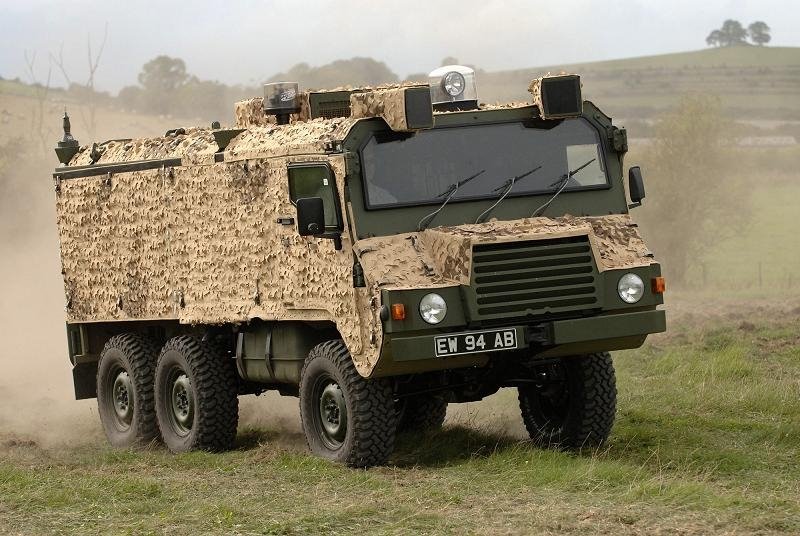
It is that last sentence which is particularly objectionable, exactly the same mindless phraseology used before by the newspaper and by the Mail on Sunday and The Guardian, all illustrating the uncritical sheep-like mentality of hacks who should know better. Des Browne has said they are "tougher" and the mindless morons imbibe the word with the same enthusiasm of a day-old baby drinking mother's milk, uttering not a word against the Pinzgauer that is giving this blog so much concern.

The Telegraph compounds its error with a dire leader on yesterday’s debate, pontificating that: "An inquiry must be held into Iraq war". "After the Falklands War," it says,

…the Franks Committee, comprising six Privy Counsellors sitting in private, reviewed events leading up to the Argentine invasion of April 1982; among those who gave evidence was the then Prime Minister, Margaret Thatcher. The far more portentous invasion and occupation of Iraq calls for a commensurate response.

Mr Blair's amour-propre should not be allowed to stifle properly informed debate on the heart of British foreign policy.
But, as we all know, the Franks Committee sat after the Falklands War had been won. In Iraq, the war is still being waged and – in our view – badly. What is needed, therefore, is a properly informed debate on the prosecution of the war, something which the Telegraph, in its puerile, facile way, has so far shown itself incapable of conducting.

That, of course, leaves the bloggers to take up the slack, with many of the so-called political bloggers laying claim to replacing the MSM as the true representatives of the people. This is what I was getting at in September but few have risen to the challenge. Not a few spluttered with indignation at the very thought that someone might actually question their performance.

But, if the Bishop is right about the government having a moral responsibility to ensure that our troops are properly equipped, in a democracy we as citizens have a responsibility to ensure that the government does its duty. And, as we have often observed, democracy is not a spectator sport – we have a duty to make our voices heard and, the greater the capability, the greater the responsibility.

COMMENT THREAD

An exercise in self-indulgence

Despite the febrile predictions of a rebellion in the government ranks, the vote on the Iraq debate, at 298 to 273 in favour of the government, was certainly not close enough to worry Blair.

It cannot have harmed his case that the debate was led by Adam Price, a man who has been trying since the dawn of time to have Blair impeached. Even by Plaid Cymru standards, Price - the Welsh Nationalist MP for Carmarthen East, is a pretty nasty piece of work. Previously, he has even incurred the wrath of the Speaker and got himself expelled from the Commons after refusing to withdraw comments that the prime minister had "misled" the house over the war in Iraq.

That was back in March 2005 but here he was again today, leading the debate, using time allocated to the minority opposition parties. But, although ostensibly aimed at forcing the government to hold an inquiry into the Iraq war, it was in fact an exercise in self-indulgence by a dysfunctional obsessive determined to pursue his own personal vendetta against Tony Blair.

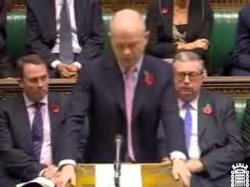
For entirely tactical reasons, the Conservative Party threw its lot in with Plaid Cymru and the Scottish National Party (SNP). Shadow foreign secretary William Hague (pictured) put the obvious but irrelevant point. "None of us can credibly argue that there will not be lessons to be learnt of huge importance for this government and future governments, and ministers should have no hesitation in acknowledging that," he proclaimed.

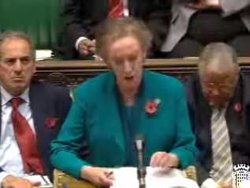
"This is not the time…" said foreign secretary Margaret Beckett, her objection that such an inquiry could undermine troops' morale, leaving SNP leader Alex Salmond to disagree. "The idea is to restore parliamentary accountability over a war which has obviously gone badly wrong," he declared. "We are stuck in a bloody quagmire in Iraq with no end in sight."

Having watched the debate from start to finish (there is a brief report on the BBC website), one has to say that the Commons did not cover itself in glory. Far too many MPs, like Salmond, are obsessed with the past, playing out a grotesque "groundhog day" as they revisit, over and over again, the reasons for going to war, totally unable to move on.

What is hugely more important is ongoing evaluation of the way the war is being prosecuted at the moment – the mistakes, the unforced errors and the seeming inability of the government to get to grips with even the basics of fighting a counterinsurgency. In many instances, we do not need to be looking at new lessons so much as asking why the old lessons seem to have been forgotten.

But far from needing a laborious inquiry, this should be the daily fare of the House, exerting precisely the pressure it did over the "Snatch" Land Rovers, the helicopters and the many other issues. These are the things that matter – the issues that can help us win the war. In fact, these are the only things that matter. The rest is self-indulgence.

COMMENT THREAD

Tuesday, 31 October 2006

Serial incompetence

In defence questions in the House of Commons yesterday, David Laws, the MP for Yeovil, asked what action was being taken to deal with the shortage of helicopter lift capability.

Surprisingly, the defence minister Adam Ingram responded that, "there is not the problem that the hon. Gentleman describes." He then continued: "We have looked into this. Commanders are not asking for more helicopters."

Clearly, that was not the answer expected as Ingram noted: "The hon. Gentleman looks quizzical…" adding, "but we have to listen to what is required on the ground."

If it is indeed true that commanders "on the ground" are not asking for more helicopter lift capability (in Iraq and Afghanistan) then we have a serious problem … with incompetent commanders. They should be sacked and replaced with better officers, who understand the role of helicopters in modern warfare.

It would have been better, however, if the question had been addressed in terms of overall helicopter capability as it is not just the transport fleet which is inadequate. We are especially deficient in light attack / reconnaissance helicopters, with only six Lynx to cover the whole of the British zone in Iraq.

It is that inadequacy as much as anything which has contributed to the humiliating inability of the Army to deal with the mortar and rocket threat on its headquarters in Basra, which has led to the decision yesterday to withdraw civilian staff from the Basra Palace complex.

And humiliating it is – an enormous blow to British prestige. What possible confidence can the population of southern Iraq have in the ability of the British Army to protect them when it cannot even protect its own headquarters from attack?

To do so, as we pointed out yesterday is not impossible nor even difficult. It just needs the application of resources. In particular, as Viscount Brookeborough observed in the defence debate in June, you need helicopters:

If there are heli hours, eagle patrolling reduces the risk immediately. If helis are at risk, the use of helis in pairs enhances safety yet again. One helicopter operates while the other one watches. Two helis in the air can virtually freeze terrorist movement in a 2 kilometre-square area.
To maintain two helicopters in the air at all times, however, needs about sixteen machines, and twice as many pilots, which is nearly three times more patrol helicopters than we have in the whole of Iraq. Such is the measure of the lack of resource available to our troops.

But, instead of doing something about it, such as buying "cheap and cheerful" off-the-shelf helicopters, with a range of good options available, including this MD Explorer (illustrated left), the MoD is going for jam tomorrow, with deliveries of the hideously expensive "Future Lynx", scheduled for some time after 2011. Even then, the load could be reduced by using UAVs but, as with the helicopters, we are opting for "jam tomorrow".

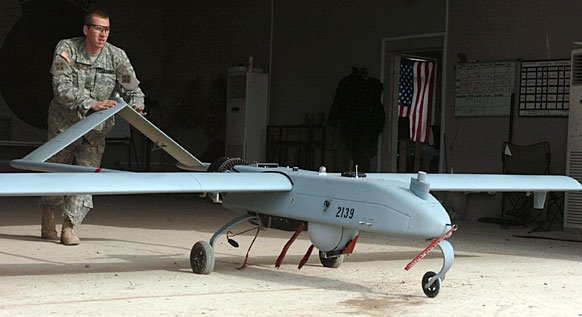
Here, it was particularly significant that the Americans use the Shadow UAV, a system which is turning out to be particularly successful and remarkably cheap. Each unit comprises four advanced air vehicles, two ground control stations, associated components and support equipment, which can maintain continuous coverage for 12 hours, at a price of approximately $10 million.

Why the Shadow is so interesting is because it is directly equivalent to the British Phoenix system which, as we recalled recently has so far cost £345 million and, having been introduced in 1998 with a supposedly minimum 15-year in-service life, has never functioned effectively and has been withdrawn from service.

Instead of making up the shortfall now – perhaps buying into Shadow - the government is embarking on a replacemment programme, committing another £317 million to build 99 Israeli-designed Elbit Systems WK-450s, known as the Watchkeeper, the total contract running to £700 million. Yet the system is not due to come into service until 2010 while the need is today, with the British Army currently unable to protect its own headquarters.

We have actually noted before what we have called this "defeatist attitude", calling in aid the incident on 3 October when a British soldier was killed and another seriously injured after three mortar shells landed inside the Shaat al-Arab Hotel base in Basra.

For sure we cannot protect every soldier against every incident but the insurgents ability to harass our forces seemingly at will is making a mockery of our presence in Iraq. That we are not able to deal with it is not an accident or unavoidable. It is serial incompetence - the result of many poor decisions, right up to this very day, which must be remedied. Instead of grandiose plans for new helicopters and UAVs in the future, we need the capability now.

Continued failure should not be tolerated.

COMMENT THREAD

Monday, 30 October 2006

Taurus excretus

Sometimes you have a piece of information which is highly relevant to a particular subject but it doesn't "click" and you don’t put two and two together.


But ever since this morning, reading about the evacuation of civilian workers from the British consulate in Basra, the mind has been working overtime – and it has come up with this.

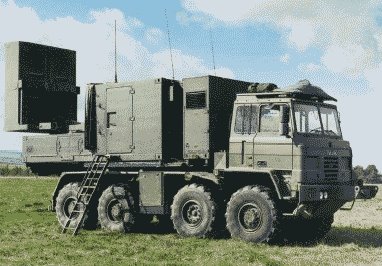
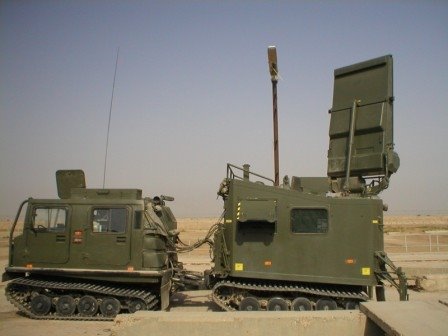
The link is to an undated extract from the Defence Management Journal extolling the virtues of an interesting piece of kit which has been in Iraq since 2004 – the Mamba counter battery radar (pictured left). What is particularly interesting though is the gushing tone of the extract:

It may be brand spanking new but already the Royal Artillery's futuristic Mamba radar system has saved the lives of countless British troops based at Camp Abu Naji, Iraq. The system, which is mounted on a Alvis Hagglunds BV206 tracked vehicle, can detect virtually any airborne missile launched within a 20km radius and provide an early warning of exactly where and when it will impact.

This is good news for the battle-weary soldiers of Abu Naji, near Al Amarah, who have been mortared on an almost daily basis. Sitting in the cool, air-conditioned cab of his Mamba, Sgt Patrick Murray, K Battery, 5 Regiment RA, heaped praise on the vehicle. He said: "Make no mistake this is the future of warfare. Not only can we give our men on the ground a warning of incoming fire but the Mamba will also tell us exactly where the missile or round was fired from and where it will land. In normal circumstances that would allow us to strike back at the enemy firing party almost immediately. But because of the risk of civilian casualties in Iraq we have to pass on the map coordinates to a patrol who will deal with the attackers."
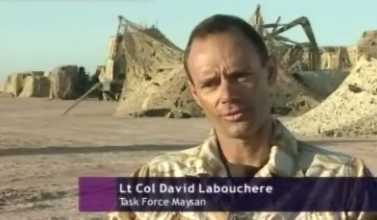
As we now know, of course, Camp Abu Naji was abandoned in August 2006 for precisely the reason that it was so often targeted by mortar attacks, viz Lt. Col. David Labouchere speaking to the Washington Post :

Almost every night for months, rockets and mortar rounds had pounded Abu Naji, the outpost where British forces made their home outside Amarah, Maysan's provincial capital. In the base's last five months of use, 281 rockets or mortar rounds hit Abu Naji, Labouchere said. Young soldiers would slip out of base at night to try to find the attackers. They would return in the morning as frustrated as when they left, he said. "The boys felt they were powerless," Labouchere said. So the British forces packed up. The night before they left, mortars gave Abu Naji a farewell pounding.
Interestingly, there is no mention here of the Mamba equipment yet, by all accounts, it was technically highly successful. So what went wrong?


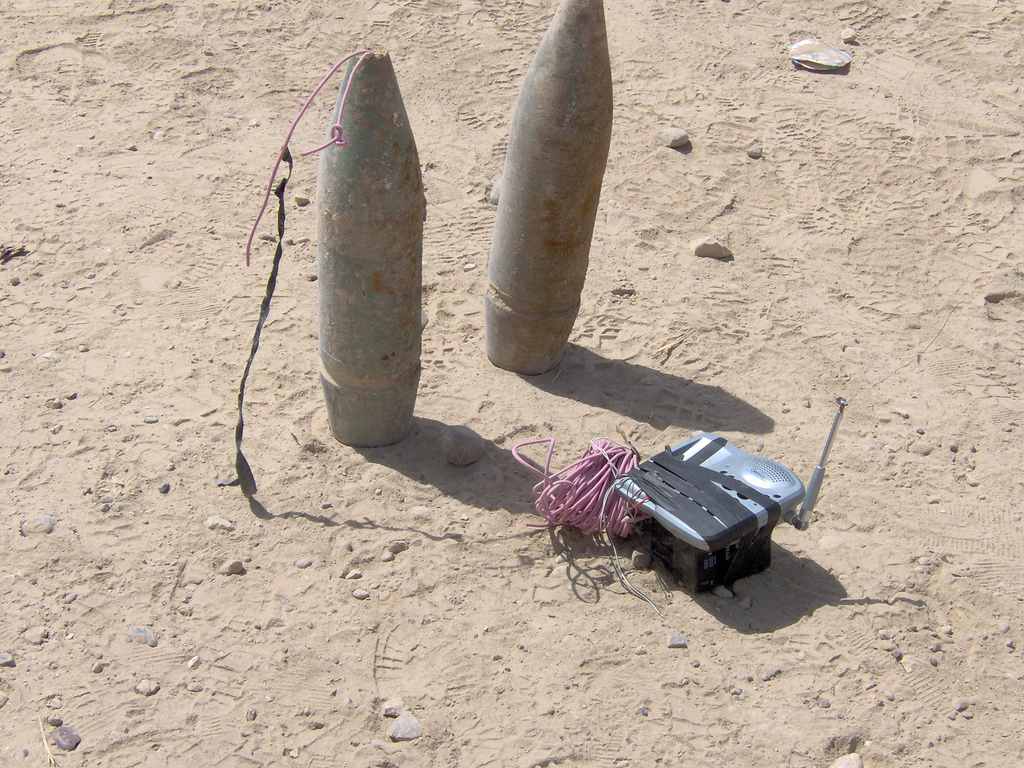
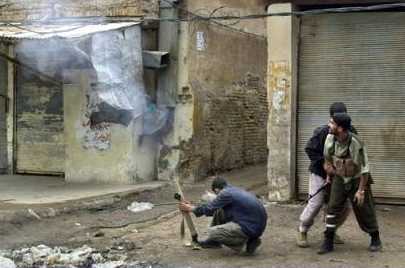
Well, the pictures above illustrate the problem – mortar equipment is both lightweight and highly portable. Terrorists can arrive in a van on a vacant lot, set up their mortar, fire off four or five bombs and then pack up their kit and drive away, all within the space of minutes, long gone before any ground patrol could reach them.

However, with the help of radar location, hit-and-run mortar teams can be can be beaten, as graphically documented by Michael Yon. But to do so requires the use of unmanned aerial vehicles (UAVs), helicopters and fast response ground units. The technology makes it possible so it is a question of resources.

There is the problem. As we know, our government simply has not provided the resources. So, with only five Lynx helicopters in the whole theatre, no UAVs and no suitable patrol vehicles, there is simply nothing that can be done except suffer the hits or run away.

But, to read the MoD hype, you could easily gain the impression that everything in the garden was rosy – until we get news like we did this morning. Then we know that it is all taurus excretus.

COMMENT THREAD

Run away… run away!


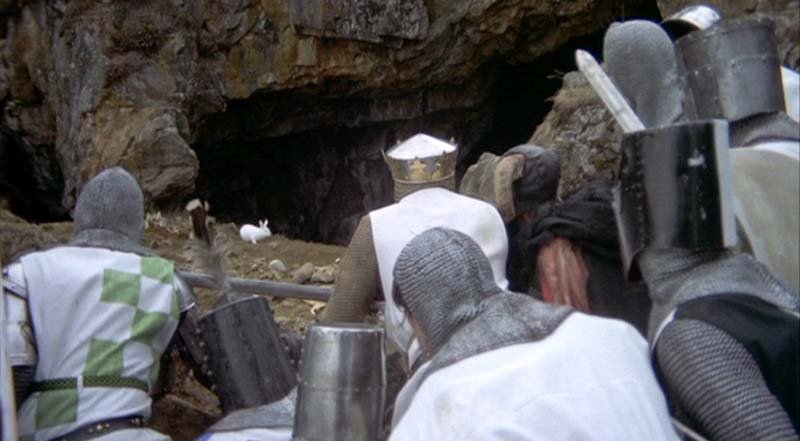
So cried King Arthur's knights on meeting the deadly killer rabbit, immortalised by the Monty Python team in the eponymous 1975 film Monty Python and the Holy Grail. But, with the news this morning that civilian employees are to be evacuated from the British consulate in Basra, this now seems to be official British foreign policy.


About 200 civilian workers are based at the Basra Palace complex and the Foreign Office says the move is "in response to increased threats from mortar and rocket attacks". However, the site is also the HQ for the Army's 7th Brigade and, as the photographic composite shows, it is eminently defensible. That the Army has been unable to prevent nuisance attacks on its own headquarters says a great deal for its lack of grip on the city.

Furthermore, the fact that staff are now being evacuated has, according to The Times, military chiefs "concerned" that this will encourage the insurgents to think that they are winning the battle to push British forces out of the southern city.

But, if the military are now complaining, they started the rot with their retreat from Al Amarah in August, allowing the militias to strip Camp Abu Naji within hours of it being abandoned by the military. Since then, the British battle group has been playing with its toys in the desert while the militias have been running riot in the city, torching police stations and cars.

Then, on the back of the weekend’s news that British troops have been confined to barracks (and here) because of the inability to deal with the suicide bomb threat in Afghanistan, we now read in the Times that the withdrawal from Musa Qala this month as part of a deal with Afghan tribal elders is simply allowing the Taleban to return.

Day on day we hear and read news of how the authorities in Britain are retreating before the tide of "multiculturalism", allowing ethnic – primarily Muslim - groups to challenge our way of life, but we hear less of what seems to be a similar retreat by the British overseas. Yet the two are inter-related. Our inability to stand up to the insurgents abroad sends a strong, clear message to the ethnic communities in the UK that the British are spineless and, when challenged, have but one policy… to run away!

What sort of signal does that send the rest of the world, to say nothing of our European Union "partners"?

COMMENT THREAD

So what do we do?


In developing our series of posts under the general heading of "Give war a chance", we need to offer some specifics in terms of how our government should prosecute the war against terror.

As we know, the main effort of this "war" is focused on the two shooting wars in Iraq and Afghanistan which are classified as "counterinsurgencies" rather than conventional wars. The aim, therefore, in theory at least, is to defeat the insurgencies in each country, the word "insurgency" being defined as "an organised rebellion aimed at overthrowing a constituted government through the use of subversion and armed conflict."

But therein – as always – lies a huge problem. How do we define defeat or, turning that around, how do we define victory? In a conventional war, this is easy. We simply take the surrender from the government or representatives of the opposing forces, on the back of a cease fire. But there is no such seminal moment in an insurgency. We know when we have lost it – the government dissolves or collapses. But at what point is it won?

Here, there seems to be some general agreement to a level that might possibly approach a consensus. The answer is simply, we don't know and the best overall expression I can find is here:

In the global war on terrorism, conclusive victory in the classic sense is probably unattainable. This sentiment was rarely expressed outright, but was implicit in the frequent use of such terms as "war of unlimited duration" and "war of uncertain outcome." The sentiment was also present in the view of those who regarded the best attainable result as a gradual rapproachement between the haves and have nots of the world. Here, economic integration and equality, with a consequent dissipation of alienation and mutual hostility, offered the best chance of ultimately nudging the two camps to a peaceful modus vivendi.
Ergo, in the pursuit of a counterinsurgency, we have to commit to as long as it takes. But, if success cannot be clearly defined in positive terms, it can in a negative way, as a very simple injunction: "don't lose".

Arguably, in order to win, we simply must avoid losing. And, in order to avoid that, we can follow the instruction given by the harassed mum to a sibling: "find out what Johnny is doing and tell him to stop it". Find out what we must do to lose, and stop doing it.

Clearly, the one way we can guarantee to lose is to sustain a level of deaths in our armed forces above that which the public will tolerate. That, inevitably, cannot be precisely defined but it can be said that the tolerance for unnecessary deaths will be – or must be assumed to be – very low indeed. Hence, one can set out an unbreakable principle: minimise "unnecessary" deaths.

In Iraq and potentially in Afghanistan, the biggest killer is the roadside bomb and/or the suicide bomb, both targeted against vehicle-borne troops. Therefore, dealing with these should be a very high priority, requiring both passive and active defences.

Passive defences, one might expect, should be easiest to define, in terms of armoured vehicles that are capable of protecting their occupants: there is a group of so-called "mine protected vehicles" which have been shown to be especially suitable which include the Australian-built Bushmaster, the German Dingo II, the Canadian-built RG-31, and now the RG-33, and the US-built Cougar (and Mastiff). That the MoD and the British military are quite evidently reluctant to adopt these vehicles has to be one of the great puzzles of our time but, it should go without saying that their use should be maximised.

The better defence, however, is to avoid ground transport in high risk areas, wherever possible and tactically desirable. As much movement as possible should be by air, using helicopters and fixed-wing aircraft.

As to active defences, coincidentally this weekend, there have been two good articles, one syndicated and the other in the Washington Post, extolling the virtues of going out hunting for IEDs. The first article is actually headed, "Engineers ensure freedom of movement", which demonstrates their value.


Unlike the British, who are changing their tactics to avoid contact – which includes skulking in barracks or or playing at being David Stirling out in the desert, the US forces are mounting an active campaign to seek out the bombs and thus reclaim the streets and their own mobility. Simply to retreat from the threat is not the answer – it concedes victory to the insurgents.

What is evident here is the variety of vehicles being used by the US (see above), with a combination of RG-31s, on "point", the Buffaloes to investigate possible IEDs and the Cougars to follow up with the explosive ordnance disposal (EOD) officers to dispose of the bombs. The British Army has absolutely no equivalents and is reliant on the same combination of Land Rovers and unarmoured trucks that it uses for everything else. This has to be unacceptable and must be addressed.

Defence, though, is only half the battle, and even then there are many other issues which need to be considered. We will deal with those in later posts. But it is also necessary to bring the battle to the enemy, something which the British Army has been very poor at doing, especially in Iraq. This we will deal with in our next post.

COMMENT THREAD