Wednesday, 6 September 2006

Dying of ignorance

A crop of letters in the Telegraph today (double-click to enlarge), under the heading, "Armed Forces deaths are the result of a lack of equipment", attests to the fact that the this blog is by no means alone in its view of the MoD's procurement performance – not that we ever thought we were.

But a recurrent theme in the debate is the issue of "underfunding". For instance, Telegraph correspondent James Heitz Jackson of London sees a direct correlation between the overstretch and underfunding imposed on our armed forces and the deaths of service personnel.

This is a charge made by former soldier Michael Moriarty in the "comment is free" section of the Guardian last week. Moriarty actually claims that soldiers are paying with their lives for the MoD’s incompetence, declaring that, "escalating commitments, budget squeezes and big equipment programmes have left Britain's forces fatally overstretched". He argues that:

Iraq and Afghanistan are stretching our forces - the army in particular - beyond the limits of the assumptions on which their funding is based. This situation has arisen through a combination of the government's enthusiasm for use of the armed forces to support its foreign-policy aims and the failure of defence chiefs to adequately highlight the limitations of military force and to demand that the government properly resource its military ambitions. There is a real risk that the armed forces could fail in their politically appointed tasks, with terrible long-term consequences for both them and Britain's world standing.

Des Browne, defence secretaryThis has had defence secretary Des Browne rushing to the ramparts with what he thinks is a rebuttal, denying that British troops are ill-equipped and that the defence budget is insufficient.

At the heart of Bowne's rebuttal is his claim that the Afghan operation is fully funded from the Special Reserve and, therefore, the defence budget is not threatened by operational costs. Furthermore, he claims, the annual defence budget has risen by five billion pounds over the last five years - well in excess of inflation.

One has to say that this sort of charge and counter-charge gets us nowhere. It is little more that the "yah-boo-sucks" type of exchange that you can get any day in any school playground, lacking as it does any detail upon which to chew.

The Eurofighter - white elephant extraordinaireActually, both are wrong and both are right – and neither has got to the key point. Yes, the defence budget has increased, and yes British forces are underfunded. And the reason both are right is that the money is going on useless projects like the Eurofighter, the Type 45 Destroyers and the Storm Shadow (the million pound bomb) – none of which are any use to the troops committed in either Iraq or Afghanistan.

But there is another all-important issue which neither of the proponents seem to have recognised. That is the value for money issue, which must also be assessed with regard to the tactical need.

Taking the second point first, outside a very narrow group of military specialists, there is very little debate as to what precisely is the right type and mix of equipment needed for counter-insurgency operations. Yet this issue is too important to be left to the specialists and – especially – the military establishment, which has a glorious and virtually unbroken record for getting it wrong.

Red coats and muskets - left to the military establishment, one somethimes thinks, these would still be frontline equipmentWhether it was the introduction of the rifle in the Napoleonic wars – which was strenuously resisted – the change from red tunics to khaki in the Boer War, and the tardy issue of machine guns, or failure to develop a suitable tank (or armoured personnel carrier) during the Second World War, the record is dismal.

One of the current, most vibrant arguments at the moment is the role of armour in counter-insurgency, one that came to the fore in the battle for Fallujah (see here and here), which has had the US military reappraising the role of Main Battle Tanks (MBTs) and committing to a major programme of upgrading their Abrams fleet to improve its survivability in urban warfare.

Similar thinking is influencing the Israeli military. Before the Lebanon war, it was a given that the IDF would halt production of the latest mark of its Merkava MBT.
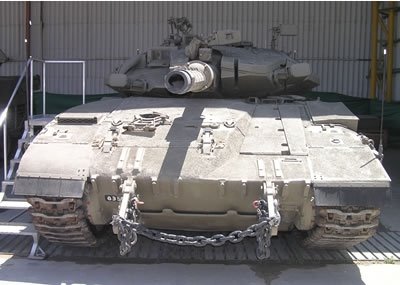
A Merkava Mk 3The view now – according to DefenseNews - is that the tank acquitted itself well in the recent fighting, not only in its primary role but in support missions such as escorting infantry, delivering supplies and even extracting battlefield casualties. The tank, therefore, is expected to evolve into a multi-purpose vehicle and its continued production looks assured.

Not only is the tank version undergoing a transformation, however, the Israelis are funding a project to develop the Merkava chassis into a dedicated armoured personnel carrier, called the Namera, building on their experiences with the Puma and its limitations.

All this is happening though at a time when the British Army is undergoing a major transformation, cutting back on its heavy armour and planning to replace much of its capability with medium-weight, wheeled armour, under the aegis of the £14 billion FRES programme, all to fit in with the EU concept of the European Rapid Reaction Force.

One can only marvel at the thought that the two armies which are most actively engaged at the sharp end with so-called "asymmetric warfare", in deadly counter-insurgency campaigns are opting for more and heavier armour while the British military establishment, imbued with the ethos of European integration, is going the other way.

A Namera APCBut, if the choice of equipment is suspect, what about the costs? One of the main disadvantages of the Israeli Namera, we are told, is the cost – at a cool $750,000 each. But that, in sterling, is £398,631 (at current exchange rates) yet this compares with £437,000 each for lightly armoured Pinzgauer trucks.

No one is saying that the Namera would be the most appropriate equipment for the British Army in Afghanistan – although I suspect that some commanders would not turn them away if they were offered them – but surely the MoD can do better than spend nearly half a million for a truck that offers little if any better protection than that afforded by a "Snatch" Land Rover.

Then, as we have reported before, while there is a crying need for tactical helicopters in both Iraq and Afghanistan, the MoD is committed to buying the " future Lynx" at an average cost of £14.2 million each, which means that they cannot be brought into service until 2014. Yet, the US Army is quite content with the well-proven Kiowa variant, at less than £2.3 million each.

The 'Panther' - at £417,000, more expensive than the NameraAll this and much more (such as the near £200 million on 400 useless Panthers – which cannot be used in Iraq - see also here) suggests that, not only is the MoD buying the wrong equipment, it is also paying far too much for what it does buy – the worst of all possible worlds. It also suggests that the problem is much more complex than the simple issue of "underfunding".

On the one hand, we have committed far too much on equipment that is of no use for the current campaigns and, on the other, much of what we do buy for the respective theatres is either overly expensive, under-performing or too late – or any combination of the three.

Echoing Booker's lament in his column last week: "Oh, for a properly clued-up media and an Opposition worthy of the name," we urgently need a properly informed debate both in Parliament and in the media.

Steve Bell in The GuardianWe have no great hopes of the former and, as for the latter, even if there were journalists around who were capable of understanding the issues, the likelihood is that they would not be allowed to write even half-way detailed stories (as we found to our cost here). Their editors, wedded to their dumbed-down diet of political soap operas and Diana-esq, human interest stories, can rise to the occasional cheap quickie - after the event – (or the occasional cartoon) but would judge detailed analyis too "boring" for their precious readers.

Thus is the public condemned to ignorance and, as we keep pointing out, the consequences are all too evident. Ironically, during the early '80s, when the killer disease AIDS made its appearance, the Department of Health advertising slogan – to increase awareness – was "don't die of ignorance". Decades later, this looks to be the fate of many of our soldiers. The horrible reality, though, is that it will not be their ignorance which does for them – but ours.

COMMENT THREAD

Tuesday, 5 September 2006

Gone Awol

It really is quite bizarre but, now that the reality has been acknowledged, it is safe for the media – in this case The Daily Telegraph - to jump on the bandwagon.

Thus it is that Richard Westmacott's story on the loss of a soldier in Afghanistan, ambushed by a suicide bomber while riding in a "Snatch" Land Rover (illustrated), is headed: "Bombers target our soldiers on patrol in lightly armoured Land Rovers".

With the death yesterday of two more soldiers in Iraq, also riding in "Snatch" Land Rovers, this invites another story from the Telegraph, written by Oliver Poole with a dateline of Basra. And the headline here is: "The vulnerability of troops on roads".

All of a sudden, therefore, the fact that the "Snatch" Land Rovers are inadequate is the perceived wisdom - hence so many starting to write about it. Poole's story thus starts: "The two British soldiers killed in southern Iraq yesterday were patrolling in a lightly armoured Land Rover."

But why you just know that Poole, like his colleagues, is simply trotting out a mantra – with no semblance of understanding – is the stock paragraph which is appearing in various guises in virtually every newspaper where "lightly armoured" Land Rovers are mentioned. This goes as follows:

Des Browne, the Defence Secretary, has announced that 300 tougher armoured vehicles, mainly designed (sic) Pinzgauers, and US Cougars, will be purchased for use in Iraq and Afghanistan but they will not be available to the end of the year.
The point, of course, is that even Des Browne has admitted that the Pinzgauers are no better armoured than the "Snatch" Land Rover and, by virtue of their flawed design, probably offer less in the way on mine protection.

But that does not trouble the likes of Oliver Poole. It has entered the collective brain of the media establishment that Pinzgauers are "tougher" armoured vehicles, and that is the way they will be described – even though they are coffins on wheels.

Just at a time when a responsible, knowledgeable media should be putting the boot in to the government, in an attempt to stop the dangerous machines being sent to Afghanistan – when serious numbers of troops will be killed if they are used – all we get in a new conventional wisdom.

When – and I do mean when – we see troops slaughtered unnecessarily in these dangerous machines, the media will no doubt then apply the descriptor "lightly armoured" to Pinzgauers as well. After the event will this become the even newer conventional wisdom. But, at a time when it really matters and lives could be saved, the media has gone AWOL, along with what passes for its brains.

COMMENT THREAD
Monday, 4 September 2006

Criminal incompetence

Not on the scale of the loss of the Nimrod over the weekend, another sad event occurred today with the death of two British troops in Iraq, and the serious injury of another, following a roadside bomb attack on their "Snatch" Land Rover, just north of Basra. A fourth soldier was lightly wounded.

A report from Middle East online describes how "insurgents" attacked a British army unit escorting a reconstruction team. They were tasked to escort a reconstruction unit to assist with the rebuilding of the area north of Basra.

The "Snatch" Land Rover was badly damaged, with the wreckage of the vehicle standing upright by the side of the road, part of the rear cabin ripped open by the force of the explosion.

This brings the total number of UK soldiers killed in operations in Iraq since the 2003 conflict to 117 and, by our reckoning, the number killed while patrolling or travelling in lightly armoured or unarmoured Land Rovers to 25 – the largest single group of casualties in the Iraq theatre.

This follows the story in the Scotland on Sunday last week, which revealed that the MoD had sold off 14 Mamba armoured vehicles for a fraction of their original cost.

That story was picked up yesterday by the Mail on Sunday and again by the Scotland on Sunday, based in information supplied by this blog.

Today, however, prime minister Tony Blair described the deaths as a "terrible tragedy". He should, perhaps, have a quiet chat with his defence procurement minister, Lord Drayson, who consistently maintained that the "Snatch" Land Rovers "provide us with the mobility and level of protection that we need".

It was only after a sustained campaign by this blog, backed by Conservative shadow ministers, Booker in The Sunday Telegraph, and then the Sunday Times, that Drayson eventually conceded that new armoured vehicles should be bought.

But, since these cannot be delivered to theatre until the end of this year, our troops must continue to ride – and die – in inadequately protected Land Rovers, and Blair has the nerve to call these deaths a "terrible tragedy". Criminal incompetence by his own government would be a better description.

COMMENT THREAD

Sunday, 3 September 2006

Squandered lives

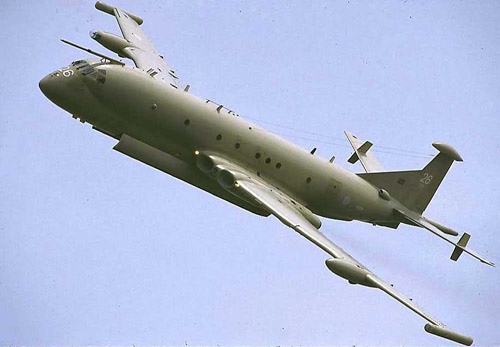
A Nimrod MR2It was with a genuine sense of shock that we learned yesterday of the loss of a Nimrod MR2 over Afghanistan, with the death of its entire crew of 14. We can only add to the expressions of sympathy to the relatives, friends and colleagues of the deceased.

The shock came in part because one does not expect to lose this type of aircraft, even in combat theatres. One presumes – as has been stated in a number of reports – that it would have been at an altitude safe from any anti-aircraft missiles that the Taliban could deploy. And, for a mature airframe, one does not expect a "mechanical defect" – the current MoD explanation – to have such a catastrophic effect.

Already though, the pundits are suggesting that it could have been a missile attack, discounting the MoD denials. They pointed out that the Hercules crash in Iraq in January last year was initially put down to "metal fatigue" when, in fact, it turned out to have been downed by a missile.

However, even if it had been a missile which downed the Nimrod, you would not expect the MoD to admit it immediately – and rightly so. It is simply not good sense to give the enemy, gratis, an after-action report, confirming his success.

A different line is taken by Colonel Tim Collins in The Sunday Telegraph today, who writes, "Government must find more funds or pull out". This is a line we ourselves have taken so we would not altogether disagree with Collins when he says:

If the 14 British servicemen killed in Afghanistan died because of the mechanical failure of their Nimrod plane, then it confirms what I have been saying for months — that the UK's aircraft and helicopters are old and absolutely worn out.
But, if The Sunday Times report is correct, and the aircraft was "co-ordinating special forces operations against the Taliban, intercepting their communications and providing real time video surveillance of what was going on on the ground", then there is an another problem which is quite as serious – if not more so – amounting to a major scandal.

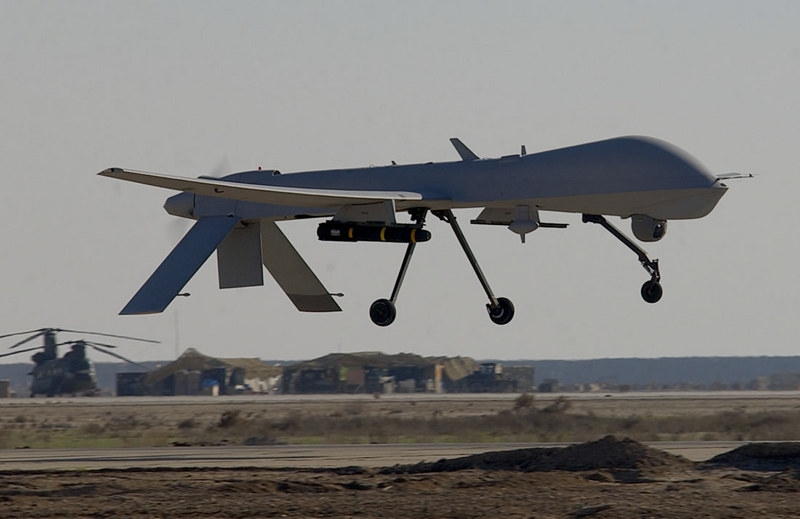
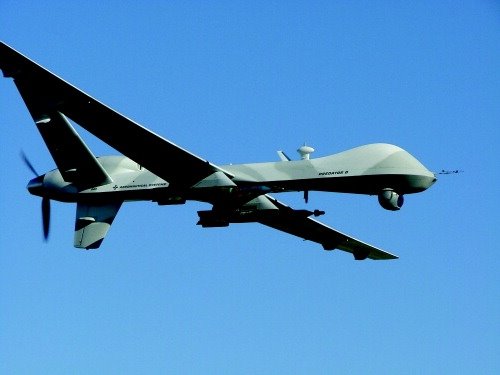
A Predator UAVThe fact is that, if the Nimrod was providing coordination and carrying out electronic communications intercepts and video surveillance (and it is really hard to think what else it could do – as a marine reconnaissance aircraft, it radars would have been next to useless) then it should not have been there at all. These functions do not require a manned aircraft and, in fact, are better (and more safely) carried out by unmanned aerial vehicles (UAVs), such as the Predator deployed by US forces and – to and extent, by UK forces.

Thus, the announcement last week that the UK government was to buy two Predators from the US, for use in Afghanistan, might not be entirely coincidental. Not only does it confirm that UAVs are needed for this theatre (as we have long argued) but it also suggests that the Nimrod was being used as a stop-gap, to make up for the lack of capability.

Therein lies the scandal. When you look at the MoD performance in seeking to equip British forces with UAVs, you are looking at a tale of incompetence which beggars belief and a colossal waste of money. So much has been wasted in fact, that we could have had the capacity already, for a fraction of the cost. There would be no wreckage of a fine aircraft and 14 men might still be alive.

A British Phoenix UAVThe story actually starts with the Phoenix UAV, developed originally for the Army for artillery spotting and then – as the MoD so often does – given a role extension to take in battlefield surveillance, for which purpose it was entirely unsuited. The story is spelt out here and makes for sorry reading.

But where the real scandal lies was elicited by Tory MP Andrew Rosindell in a Parliamentary question, answered in July 2006. This revealed that the "Phoenix unmanned aerial vehicle system" had cost approximately £345 million since inception. Ignored by the media, this was for a system that was introduced in 1998 with a minimum 15-year in-service life, which had never functioned effectively – or at all- and could not be used in either Iraq or Afghanistan where it is most needed.

Now, the point is that the deficiencies of this abysmal machine were well known – and certainly to the MoD – by the year 2000, when the system failed to perform in Kosovo. It was certainly abundantly clear in 2002 when a reported upgrade to allow it to operate in hot weather was "put off to save money".

In fact, the "upgrade" was more likely cancelled because no amount of money would improve a basically inadequate design but, whatever the reason, this meant that the British Army went into Iraq without what is universally regarded as vital equipment.

We do now know that the MoD partly made up for this deficiency by leasing time on Predators in Iraq, but this, we also know, has proved unsatisfactory. The UAVs have been treated as "theatre assets" and have not always been available to British forces.

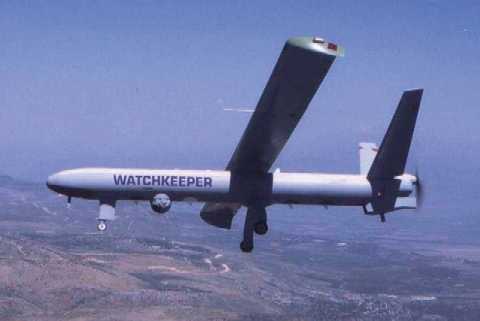
The proposed Watchkeeper UAVInstead of doing the sensible – and vitally necessary – thing, however, and buying more Predators from the US, not least to provide surveillance in other theatres such as Afghanistan, the MoD decided to launch on another programme of UAV development. And, with the speed of a glacier, that took until last October to finalise, with the government committing another £317 million to build 99 Israeli-designed Elbit Systems WK-450s, known as the Watchkeeper, the total contract running to £700 million.

But the worst of this was that, while the government was so eagerly committing troops to Afghanistan, the system was not due to come into service until 2010 – at the very earliest. Even then, its capabilities will fall far short of the Predator, which is already up and flying, proving its worth in both Iraq, Afghanistan and elsewhere.

Thus, having so far committed the best part of £1 billion to providing UAVs for the armed forces – with no prospect of them seeing any capability until 2010, the MoD last week decided to spend yet another £30 million on two Predators for Afghanistan, to tide them over and provide at least some of the much needed support that these machines can give.

In the meantime, Nimrod aircraft, it seems, have been filling the gap and, if our contention is correct, that is why there is why 14 men now lie dead in Afghanistan.

Nor, indeed, does the story end there. Predators are not line-of-sight vehicles – i.e., they operate out of sight of their controllers – which means you need satellites to convey the communications and control signals and to receive the data they produce. Furthermore, as the US has found out, UAVs chew up band-width to such an extent that this has proved a factor limiting their deployment, not least because other services compete for air time.

A Skynet 5 communications satelliteTo operate these Predators, the British government will need satellite capability and there has been no announcement on how this will be provided – or at what cost.

We do know, however, that the MoD is seriously short of capacity and is relying on its new communications satellite system, Skynet 5, which will not be fully operational until 2008. This could explain why only two Predators or being bought – for an area four times the size of Wales. It is quite possible that there is no capacity to operate more.

In any event, this whole sorry saga is yet another example of inefficiency, waste and mismanagement. As always, the taxpayer pays the monetary price, getting less for more, while those at the sharp end pay with their lives.

And, if the media has noticed something is wrong, it has not even begun to understand why.

COMMENT THREAD

They catch up … eventually


We did it on 3 July, barring a key bit of information that we had to tease out of the MoD through a Parliamentary question. This the Scotland on Sunday picked last week and we followed through last Friday.

Now, today – two months after we broke the original story - the Mail on Sunday has finally run it. Yet, at the end of the same month that we first ran it, little Shane Richmond, Telegraph web news editor, was happily pushing out an inane comment from Malcolm Gladwell, the author and New Yorker journalist, that blogs are "derivative".

Yet again this illustrates that sections of the MSM are so far up their own backsides that they haven't even begun to realise that, increasingly, blogs are running the agenda on certain issues. They are ahead of the curve.

As for the MoS, typically, it has gone for the cheap, sensationalist angle and has missed key parts of the story. That makes it just another space-filler rather than a contribution to the debate about the inadequacies of the MoD, which would have moved the issue forward.

Not least, it parrots uncritically the MoD line that the Mambas were "too heavy", without stating why - and that they "were not designed as a patrol vehicle". Yet, that is precisely what they were designed for, a task - even as we write - at which, in the form of the RG-31, they are excelling in Canadian hands in Afghanistan.

It then mentions that, last month, the MoD "revealed" that the Army is to get 300 new, "tougher" armoured vehicles for use in Iraq and Afghanistan - failing, of course, to note that 100-plus of these are the useless Pinzgauer coffins on wheels. This, incidentally, is from Whitehall correspondent, Jason Lewis, who should have been aware of what was happening. When the butcher's bill comes in, you can bet the MSM will be waxing indignant but now, when there is an opportunity to do something and actually save lives - they are silent.

And, although all the information for the MoS piece came directly from the exertions of this blog – they even used the same photographs – was there any mention of EU Referendum? I'll give you three guesses.

COMMENT THREAD

Saturday, 26 August 2006

The British are running

It was as recently as late June – two months ago – that we were writing on this blog that al Amarah in the southern, British sector of Iraq had become the "badlands".

So far had the security situation deteriorated that routine patrols in the hopelessly inadequate "Snatch" Land Rovers had been abandoned and patrolling was limited to daily sallies in Challenger MBTs and Warriors. We recalled how, in order to carry out border patrols from their base in Al Amarah, the King's Royal Hussars were having to rely on their Land Rovers being airlifted by helicopters past the town, to avoid their being attacked en route.

Now, two month after our report, we are being told that the security situation has improved so radically that the British Army can afford to leave their base and hand over security to local Iraqi forces.

It is in that context that one must read the report in today’s Daily Telegraph which records that "jubilant Iraqi looters" stripped the military base after the British forces pulled out. Thousands of jubilant Iraqis, we are told, looted the base: everything from doors and window frames to corrugated roofing and metal pipes was pillaged.

No sooner had the British departed than a crowd gathered outside Camp Abu Naji. Three companies of Iraqi troops stationed in the base initially dispersed them with shots into the air but, the following morning, a mob of between 2,000 and 5,000 returned, hundreds of them armed with machineguns and rocket-propelled grenades. After sporadic fighting the Iraqi troops retreated to a corner of the camp as the base was stripped.

Hundreds gathered around the local offices of Moqtada al-Sadr, the radical Shia cleric whose followers had fired 281 mortar rounds and rockets at the camp, to offer their congratulations. A loudspeaker repeatedly broadcast the triumphant message: "This is the first Iraqi city that has kicked out the occupiers." By nightfall, said Lt Rifaat Taha Yaseen, of the Iraqi army's 10th Division, "everything" had been taken.

Says the Telegraph, "The capacity of Iraqi security forces to secure the country is the central plank of the British exit strategy. That they seem unable to secure even their own bases does not augur well."

In fact, the British strategy is a sham. It is plain as a pikestaff that the Iraqi forces are unable to maintain order – and neither can the British with their current force structure, equipment and numbers. But, rather than admit this and do the honourable thing, declaring that it is pulling out, our government is doing it on the sly. It is pretending things are under control and that it is achieving its objectives.

Once again, all we get is spin and lies, this time to dress up the fact that, when it comes to our policy in Iraq, we have made an ignominious retreat.

COMMENT THREAD

Sunday, 20 August 2006

The wrong kind of war

On the road to Al-Zubair - a Snatch convoy ambushedFamously, in the days when we had a nationalised railway network and the system was routinely brought to a grinding halt with the even moderate winter snows, a hapless executive was hauled before the cameras to explain why, on one particular occasion, a particularly light fall of snow had brought trains to a complete halt.

It was, he explained to the incredulous media, "the wrong kind of snow". This he later expanded upon, telling us that it has been a very fine snow which, while not heavy enough to block the lines, had invaded the engines, blocking filters and shorting out electrics. This was plausible enough but too late. Forever in the vocabulary now rests that sneering commentary on the inadequacies of nationalised industries, "…the wrong kind of snow".

Reviewing now the recent performance of the Israelis in the Lebanon campaign – something which I promised in a post a week ago, I suppose the best that can be said of it is that the IDF was fighting "the wrong kind of war".

What brought this to mind was a photograph in today's edition of The Sunday Telegraph which we published on this blog nearly a month ago (so much for blogs being "derivative"), which illustrates a different facet of precisely the problem which the Israelis currently face (above left).

In the instance illustrated by the photograph and the accompanying story we have an issue rehearsed at length (and in depth) by this blog, where we argue that British troops attempting to police southern Iraq are dangerously ill-equipped.

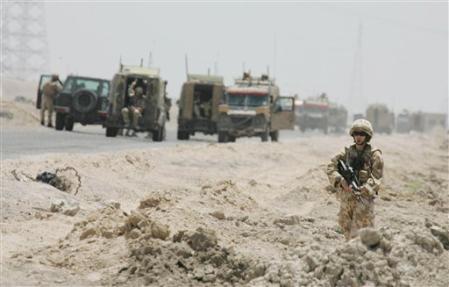
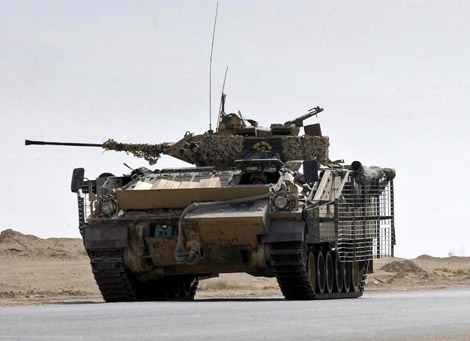
More specifically, we have an army in theatre relying on equipment such as the Challenger Main Battle Tank (MBT) (pictured above, on patrol in Al Amarah, southern Iraq) and the Warrior Mechanised Infantry Combat Vehicle (MICV) which were devised as the core weapons of armoured divisions intended to combat a massed Warsaw Pact armoured thrust in northern Europe. In short, they were never intended for counter-insurgency operations (especially in the high temperatures of the Iraqi theatre) and are wholly unsuited to it.

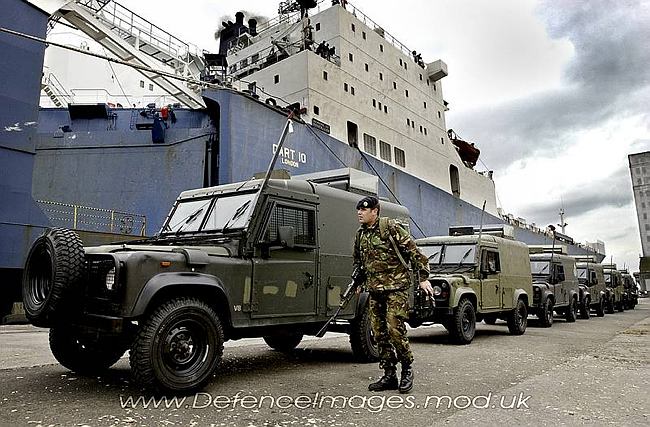
Snatch Land Rovers on the dock in BelfastPartly recognising this, in late 2003, the British Ministry of Defence drafted in a consignment of mothballed armoured Land Rovers (the nearest equivalent to the up-armoured Humvee), themselves designed for dealing with street violence in Belfast and other Northern Ireland locations, during the height of the "troubles".

Known universally as "Snatch" Land Rovers, these might have been adequate for dealing with the provisional IRA and general street violence but against an enemy which had access to any number of munitions and increasingly sophisticated roadside bombs – such as the explosively formed projectile (EFP) roadside mine – they proved easy prey. Thus it was that, by early this year, soldiers patrolling in "Snatch" Land Rovers had accounted for more than a quarter of our combat deaths in Iraq.

This was a problem which has also faced the US forces, which have suffered a higher proportion of casualties and larger absolute numbers from what are generically known as Improvised Explosive Devices or IEDs.

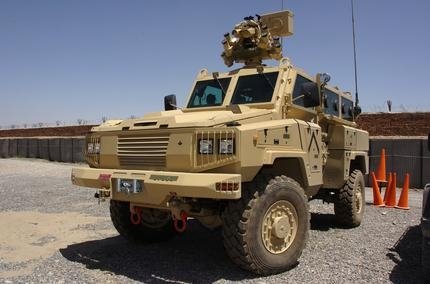
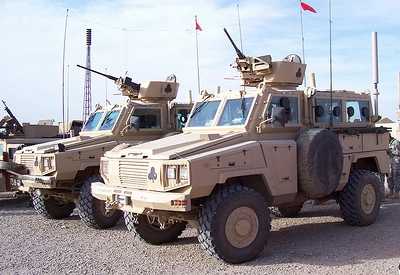
The RG-31, operated by Combat Engineers in the USMCIn response to that – after a series of false starts, which included a programme of adding armour to the standard utility vehicle, the Humvee – the US, led by the US Marine Corps, started a re-equipment programme using vehicles based on Rhodesian and South African experience, specifically designed to deal with the IED threat. These include the RG-31, the Cougar and the Buffalo.

Less obviously but just as significant, the US forces are undergoing a fundamental restructuring. In the war against the hit and run bomber, who will fight in civilian clothes and merge with the civilian population, there is no front line. Casualty rates amongst non-combatants (known from Vietnam days as REMFs) have matched those in combat units.

The USMC 'JERRV' Cougar vehicle used by ordnance disposal teamsThus, in this type of war, the spearhead troops are no longer the infantry and the tankers but the combat engineers. Numbers of these troops in the US order of battle have been increased substantially and, using their new RG-31s and other equipment, they have been active in hunting out IEDs. As a result, they are most often at the sharp end in the vicious fire-fights that develop when insurgents ambush the bomb hunters.

In Lebanon, the problem confronting the IDF was much the same – the hit-and-run fighter in civilian clothes – but the weapons employed by the enemy differed. In Iraqi desert conditions, where there is often little cover and most of the roads are metalled, the roadside bomb is the weapon of choice. In Afghanistan, where cover is also sparse in some areas, but many more of the roads are unmetalled, the mine is commonly used. But in south Lebanon, where the topography is in places more similar to the rolling, verdant hills of Gloucestershire and Somerset (not for nothing is the area known as "Little England"), the man-portable anti-tank weapon comes into its own.

A Sagger missile - demonstrated by Hezbolla in yet another photo-opportunityWith thick cover, or the protection and disguise of civilian villages, small teams using RPG-7s, or the fearsome RPG-29, anti-tank teams can wreak havoc with armoured formations in what is nightmare country for tankers. Hezbolla have even been pressing into service Russian-made "Sagger" wire-guided missiles – which caused such great slaughter of Israeli tanks during the Yom Kippur war – and even captured (or purchased) US TOW missiles.

Combined with roadside bombs – some disguised as boulders, copying techniques pioneered by Iraqis, who have been known to cast their bombs into kerbstones) – these make a thing of the past, rapid armoured thrusts of the type that so thrilled us during the 1967 Six Day War, and the inspired counter-thrust over the Canal during Yom Kippur.

Instead, like the Americans have learnt to do, and the British are now following with a batch of Cougars on order, the Israelis have had to "up-armour" their engineers, on whom they rely for route clearing before what are now considered "conventional" armoured forces can be deployed. Thus did we see the widespread use of the Puma in the first, cautious phases of the ground campaign.

One of the most-photographed vehicle typesThese vehicles, deployed by combat engineers, are little more than turretless Centurion Main Battle Tanks, known as the Poretz Mokshim Handasati (minefield breakthrough vehicle). Although better than nothing, they are far from ideal, not least because they lack the essential attribute of an armoured personnel carrier – a rear exit door. Egressing troops are forced to clamber over the hull, exposing themselves to fire.

An Abrahms tank destroyed by an IEDFurthermore, as US forces have found – and as will the British – up-armouring invites a version of the arms race, where the terrorists use heavier and more sophisticated weapons, to the extent that not even the US 65-ton Abrams Main Battle Tank is immune from attack. As well as passive armour, therefore, a way of bringing the battle to the enemy must be found.

It was here, as we observed on this blog, that the Americans found a way, in the battle of Falluja which, when they comes to be drafted – will re-write the tactical manuals.

Contrary to perceived wisdom which has declared that tanks in urban warfare are death traps, the US used their Abrams as "point" to flush out the otherwise invisible enemies by presenting them with a highly attractive target. Dangerous it might have been for the tank crews but, generally, even if an Abrams is disabled, the crews tend to survive an RPG attack.

The US Predator UCAVOne the attackers had revealed themselves, above them were circling reconnaissance drones (Unmanned Aerial Vehicles, or UAVs) which would relay their co-ordinates to the artillery. Borrowing from a technique pioneered in Viet Nam, these were located in fire-bases away from the action and, within minutes, could bring down highly accurate, targeted fire on the insurgents, bringing instant death.

Additional assets, which could perform the same function as the artillery, were armed UAVs (known as UCAVs) or fighter-bombers stacked in the sky awaiting targets.

This, in the early stages, is what I though the IDF was doing, but it does not seem as if they had got the phasing and the tactics right. Casualties in tanks and crews, therefore, seem to have been relatively high, without corresponding gains in terrorists killed.

And, if this is the ground battle, there is the other element – the Katyusha strikes. In Iraq, the US forces are also prone to such attacks but their greater danger is the "White Van" mortar team. Merging with civilian traffic, these vans can park momentarily and discharge a mortar team to lob a few bombs, which then re-mount and drive off into the traffic, indistinguishable from the hundreds of other vans on the streets.

To counter this, the US has used counter-artillery radars which can locate the firing points of mortars within seconds and, with orbiting UCAVs, fighter bombers or even helicopter patrols, they can return accurate but lethal fire within minutes – or, if preferred, guide ground forces to intercept. Such would have been the expected response from the Israelis so, far from being impressed by their videos showing Katyusha launches, followed by IAF strikes a day or so later, this demonstrated that the capability was lacking.

The propaganda war

Alongside the shooting war, however, there has also been the propaganda war and it is here that the Israelis have proved dismally flat-footed. They are fighting an enemy which, as we have seen with the Qana incident – and many more – is willing to parade the bodies of its dead and, while hiding behind civilians (and even keeping them in harms way) exploits a sympathetic media and an "international community" which is locked into the paradigm that war is the greatest of all evils and any other solution is preferable.

Hezbolla in particular are aided by the notoriously poor local building standards and their fragile, reinforced concrete-framed buildings which give rise to such spectacular pictures of collapsed buildings after relatively modest impacts. But, in using ordnance such as 500-1000lb bombs, with every attack, the Israelis have been creating propaganda opportunities for their enemies and detractors rather than achieving tactical battlefield gains.

And, while propaganda in war has always been important, it is more so in current campaigns. In the past, when Israel could conduct "lightning wars", by the time the international community had mobilised to enforce a cease-fire, the IDF had usually achieved its tactical and strategic goals.

But the nature of war has changed. No longer is territorial gain the objective and neither are the opposing armies conveniently lined up in uniform, fighting an open war. The objectives in this new type of war are to bring the enemy to battle and to kill people, to disrupt the hierarchy, the command and communication systems and to destroy materiel.

That process, against the weapons the enemy is prepared to deploy and tactics it uses, takes time. But, even at the glacial speed at which the international community operates, no sooner have the opening phases of combat been rolled out and the pressure is on to bring overt hostilities to a halt. To enable the battlefield objectives to be achieved, therefore, the armed forces also have to win the propaganda war, to give them enough time to complete their tasks.

Collateral damage

In this war, the currency is collateral damage – dead babies and destroyed buildings, images of which have had more effect on the battle than the tanks and guns deployed by the IDF (for a more detailed discussion, see here).

Therein, like the British Army in Iraq, the IDF is using the wrong weapons and tactics. For it too, it is the "wrong kind of war".

Much has been said and written as a result about the limits of military power – much of it nonsense. Of course, final solutions require diplomatic initiatives and societal changes but, when you have any enemy with weapons who is attempting to kill you, there is only one response – to kill them. That means military action and, therefore, war – by whatever name you call it.

An IAF F-16But it is how that war is conducted that makes the difference, and the difference is a matter of technology. The IDF currently is equipped for its previous wars, with superb armoured formations and a fleet of high performance fighter bombers that are capable of executing great slaughter of conventional forces. But they are the wrong weapons for this type of war.

On the one hand, in the style of the Fallujah-type operation, they need heavy but highly mobile armour to protect their troops as they provide targets for the enemy, in order to flush them out. And, coming into service is a new generation of artillery with rates of fire that are simply stunning. Capable of firing 40 or more shells a minute, these guns can also lay up to seven shells on a target to arrive simultaneously. Combined with unprecedented accuracy from GPS guidance built into the shells, these can intervene immediately with deadly but highly localised force on any terrorist foolhardy enough to attack.

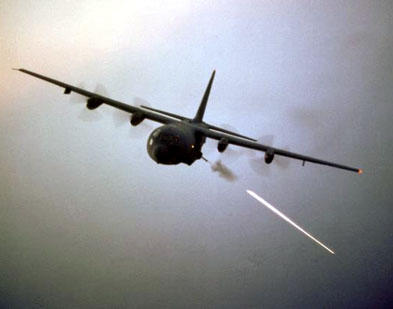
For the Katyusha problem, what is needed is not fast jets with limited endurance and, therefore, loiter capability, dropping big bombs. The weapons needed are long-endurance UCAVs and platforms like the AC130 Spectre, with high-precision, small-warhead weapons. One such, in the process of development, is the Viper Strike which, with a 7lb warhead, can kill the occupants of a car without scratching the paintwork of the next car in line, or take out the occupants of a room in a building, without disturbing the neighbours.

Suitable platforms, guided by sensor arrays in satellites, UAVs and electronic warfare aircraft, can loiter the battlefield and, when a fleeting target appears, can launch instant but again highly localised death, making terrorist attacks near certain suicide.

Will we learn?

Since Israel is fighting for its very survival, the odds are that it will learn its lessons from the Lebanon campaign, and apply them. There is some confidence that the US forces will do likewise – they, after all, are developing the technology.

One casualty will almost certainly be the multi-billion dollar project called the Future Combat System (FCS). The plan here is to equip forces not with heavier armour, but lightweight, air-portable vehicles, relying for their protection on sophisticated sensors, the rapid exchange of intelligence and stand-off weapons to take out the enemy before he is within range and can do damage. But, when faced with an enemy that has the capability to deliver lethal blows and reveals himself only in the act of firing his weapon (or not at all in the case of an IED or mine), this system is fatally flawed.

Many knowledgeable commentators believe the US will scrap this system but, as a letter in the Sunday Telegraph reminds us, the British Army is still committed to a similar system, a £14 billion fantasy known as the Future Rapid Effects System (FRES), all geared to providing the European Rapid Reaction Force with its "teeth".

Should this go ahead, we will find that not only are the British forces currently equipped for the wrong kind of war, they will perpetuate the error, at enormous cost in money and – eventually – lives. For once, we should look further afield and watch very closely what the Israelis do.

COMMENT THREAD
Thursday, 27 July 2006

Rethinking our role

A Type 23 frigateMulling over the implications of the Israeli situation, our activities in Iraq, Afghanistan and elsewhere, and following on from my post about the need for new thinking, my deliberations were given a new focus by an e-mail from a reader.

He had been to a presentation on UK Maritime Trade Operations in the Gulf/Middle East and offered a "few interesting facts".

In the Red Sea, Arabian Gulf/Indian Ocean and Persian Gulf area, he was told, there are generally about fifty coalition naval vessels (mostly frigates and destroyers) dedicated to security and anti terrorist operations.

To put this into context, this is twice the number of frigates/destroyers left after the Hoon cuts and more than twice the number sent to the Falklands in 1982. They are supported by submarines, maritime patrol aircraft (including RAF Nimrods) and various shore based facilities, as well as tankers and other support vessels.

Twenty of these vessels are kept in the Persian Gulf itself, with four on station at any time of the Iraqi coast. Furthermore, there are similar operations performed by NATO warships in the Mediterranean, while vessels carrying equipment, ammunition and other stores for UK forces have to be escorted by the Royal Navy. This includes ships carrying materiel stuff to Pakistan for use by UK forces in Afghanistan.

The increased operation tempo, combined with the cuts of the last few years, means that it is not just the Army (and elements of the RAF) which are suffering from overstretch. The Navy is also suffering badly as well, particularly since the UK has other commitments. As a result, nine-month deployments are becoming common, with an adverse effect on morale.

This is not helped by the uncertainty over the future carriers and the seventh and eighth Type 45 Destroyers but, more to the point – like the Army and Royal Air Force, they are largely equipped to fight a different sort of war from that which it is present undertaking.

It is all very well having the hugely sophisticated and expensive Type 45s, geared to knocking advanced fighters and bombers out of the sky, or massively costly aircraft carriers to support the European Rapid Reaction Force, but much of the Navy's work is in low intensity tasks such MIOPS (maritime interdiction operations – i.e., challenge, board and search potential smugglers) or deterring piracy and other forms of maritime crime.

For this, we are told, there is an urgent need for a number of fast, armed patrol vessels. Such vessels need a flight deck and hangar for an embarked helicopter, plus accommodation for a number of Marines/Special Forces - perhaps an upgraded River Class offshore patrol vessel, or even this little Italian number (below).

An Italian Commandante patrol vesselIn the longer term, this might be cheaper than keeping high-tech, multi-role frigates on station, such as HMS Kent (type pictured, top left) which was recently the lead RN ship in the northern Gulf. On the other hand, additional, dedicated patrol vessels might allow the UK to take a more active role in stopping the oil smuggling which is undermining the Iraqi economy.

What all this again points to is the need to re-orientate our thinking, and address the actual tasks confronting our armed forces, rather than fantasy tasks, perhaps in pursuit of EU foreign policy objectives, some time in the unforeseeable future.

This, to some extent, was what Liam Fox was getting at when he delivered his speech on defence in June, but the real debate has yet to start. Unfortunately, it seems, the Boy King is tiptoeing away from any such thought. As always, the debate will have to start without him.

COMMENT THREAD

Wednesday, 26 July 2006

Mystery solved

The 6x6 Cougar destined for the Army in IraqIt is a reflection of how deeply ingrained is my distrust for government that the last place I would think of looking for information on the armed forces is the MoD website – especially since it was "improved", whence most of the archives have rather conveniently gone missing.

Anyhow, one of our readers pointed me in that direction and, lo and behold, we have a picture of the new armoured vehicle which the MoD is purchasing for our troops in Iraq. The photograph, supplied by Force Protection Inc, is of a 6x6 Cougar variant and, from the colour scheme, it is definitely one of the batch originally destined for the Iraqi Army, known as the Iraqi Light Armoured Vehicle (ILAV).

The Snatch Land Rover - essential for its 'size and mobility' - now supplemented by the 6x6 CougarThere is an extremely good article on this here (which links to some essential reading here) and the indispensable Defense Industry Daily gives a good narrative of the MoD contract here.

Just what the Iraqi Army feels about the MoD jumping the queue has not been recorded but it is more than a little rum that, at a time when the Iraqis are being asked to assume greater responsibility for internal security, the British step in and swipe their vehicles from them, leaving the people who are most at risk to ride around in unprotected or lightly armoured vehicles.

If there is a comedic aspect to this, it is Lord Drayson, the defence procurement minister, who having told us of the RG-31, as recently as 29 June, that "we judged the size and mobility of the vehicle not to be appropriate to the needs of our Armed Forces today", is now buying something a foot wider and higher, and nearly four feet longer. Incredibly, it is nearly ten feet longer than the Snatch Land Rover and three feet wider and taller.

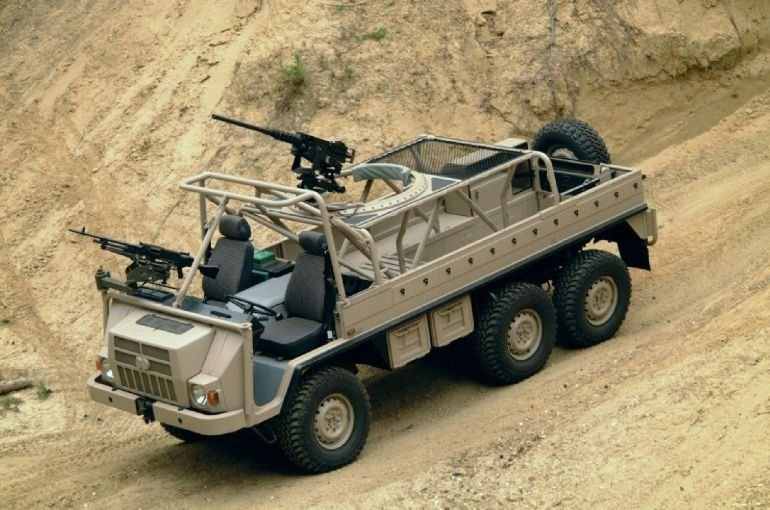
The Pinzgauer 'coffin on wheels' - destined for mine-infested AfghanistanBut there is nothing at all comic about the choice of the Pinzgauer Vector, a picture of which is also up on the MoD website. Bought primarily for its cross-country performance – which is superb – the MoD is calling this a "Protected Patrol Vehicle". With its slab sides and lack of window in the troop compartment, it is hard to believe the MoD is serious about this being used for patrols. The soldiers inside will be sightless passengers, guarded only by an unfortunate soldier (or two) with his head stuck out the roof as "top cover", terrified that the vehicle will overturn (as top-heavy, cross-country vehicles are prone to), crushing him to death.

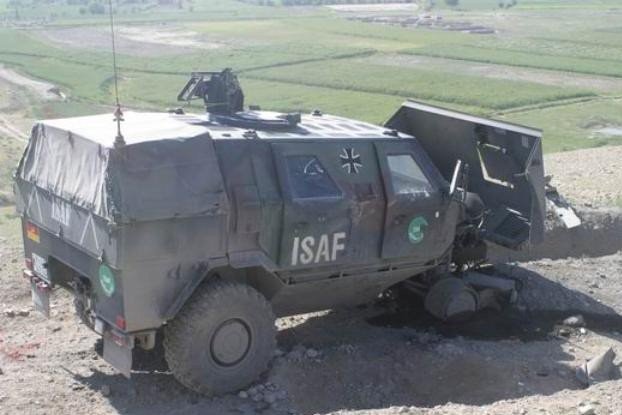
The German mine-protected Dingo, after a mine strike in Afghanistan - the crew were uninjuredAs for "protected", that it ain't, except against the lightest of threats. The vehicle, as we have observed before (here and here) offers no protection against anti-tank mines, which are available in abundance in Afghanistan – a fact to which the Germans and the Canadians will attest. The latter, having recently lost four men travelling in a lightly armoured G-Wagon (the Mercedes equivalent to the Land Rover) are now counting their good fortune that the next mine strike hit troops driving in an RG-31.

While there is some considerable debate about the benefits of mine protected vehicles in dealing with IEDs – which plague the coalition forces in Iraq - the situation in Afghanistan is different. In Iraq, most of the roads have metalled surfaces – which is why the insurgents resort to roadside bombs - but, in Afghanistan, huge areas are accessible only by unmade roads, which favour the use of mines.

Perhaps millions of mines are left over from the Soviet era and the accounts of the Red Army experience during their occupation show that most of their casualties came from mine strikes. In putting these Pinzgauers into Afghanistan, the MoD are out of their tiny minds… they are criminally insane.

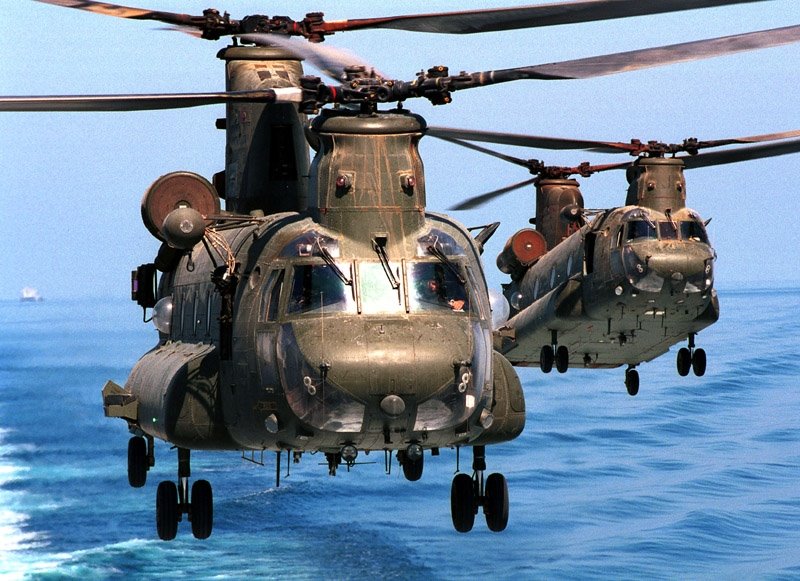
Chinooks - the optimal As opposed to mine protected vehicles, however, often the most appropriate way of protecting troops is to use helicopters. There, of course, we bump up against reality – the cupboard is bare.

Here though, is an interesting reflection for a site named "EU Referendum". Something that has haunted me from my days in the European Union Parliament is the cohorts of preening MEPs, each of whom cost the British taxpayer £1.2 million a year. Many would tell me how vital their roles were, in increasing British influence in the EU.

When it comes down to real influence, however, in the real world this turns out to have more to do with how many helicopters the British can field. With 78 British MEPs at present, costing us over £90 million a year, that is the price of five Chinook helicopters a year with change left over. Somehow, I suspect – given a choice – most people would opt for the Chinooks.

Similarly, for the £11 billion a year we pay in "contributions" to the EU each year – nearly twice our annual defence procurement budget – I suspect we could buy a great deal more influence if we spent it on "toys" – provided, of course, we did not fritter it away on the European Rapid Reaction Force, and spent it on kit that was actually fit for purpose.

COMMENT THREAD

Monday, 24 July 2006

Corporate manslaughter


The secretary of state for defence today confirmed the MoD's intention to supply troops in Afghanistan with Pizgauer Vector armoured vehicles, which we have already dubbed "coffins on wheels".

It says something for this issue that the only previous media coverage was an uncritical piece in the Sunday Telegraph which neglected to point out that this vehicle offers virtually no protection to mines – in what is one of the most heavily mined countries in the world.

The unarmoured PinzgauerIn our view, it is criminal negligence to purchase a vehicle, the design of which puts the driver over the front wheel, where he is most exposed to the effects of blast, and in which position it is almost impossible to devise adequate protection. And, while the danger is not immediately obvious from the pictures of the armoured vehicle, a view of the unarmoured vehicle, kitted out as a gun truck, demonstrates the point with clarity.

Cone of destruction from a mine blastShould the vehicle run over a mine, the driver is positioned right in the centre of what is called the "cone of destruction", an illustration of which we have taken from a technical manual on mine protection. A photograph of the type of damage caused shows quite how vulnerable drivers are. Furthermore, what applies to mines also applies to a greater or lesser extent to IEDs.

What is utterly amazing is that, while the MoD have conceded the point in Iraq, with its decision to buy Cougars, it is still pursuing the Pinzgauer option for Afghanistan. Yet, while the Cougars cost £258,000 each, the Pinzgauers cost £437,000. They are not only coffins, but very expensive coffins.

Interestingly, last Friday, the Telegraph ran a piece on the government's intention to enable the prosecution of companies for manslaughter if they are suspected of causing a death through management failings. A new offence would apply to corporations, including public bodies, and introduce unlimited fines.

In our view, if or, as is more likely, when troops die in a Pinzgauer as a result of a mine explosion, "corporate manslaughter" provisions should be applied to MoD for procuring such a dangerous vehicle. But second in line should be the media who have the power to raise such issues but who seem to prefer expending their energies prattling about bagpipes.

COMMENT THREAD

Wednesday, 19 July 2006

Taxi! £250 a mile, guv!

For an update on this post, see here.

A Warrior MICV in IraqThe defence questions we have been putting into the system are beginning to trickle through, dreadfully slowly, the answers, as we pointed out yesterday, largely incomplete.

One more which has come through is another question by Owen Paterson asking for the cost per track mile excluding crew costs of operating the Warrior MICV (often dubbed a "battlefield taxi") and an RG-31M in Iraqi conditions.

Adam Ingram again was the nominal respondee and again the answer is incomplete. The full capitation cost for the Warrior, he writes, is calculated for financial year 2006-07 as £154.04 per kilometre. That is equivalent to £250 a mile – no wonder the MoD prefers to quote in kilometers.

However, the figure quoted is "based on peacetime usage" and Ingram tells us that "specific operational track mile data is not held centrally" and could be provided "only at disproportionate cost". This does the MoD evade telling us what the Iraqi figures actually are. One has to be a little alarmed if the MoD does not have these figures to hand, as any efficient fleet manager will always be fully aware of his operating costs.

But that is not the name of the game. The MoD is seeking to conceal information and this is the classic get-out. And it is not surprising that it is trying to conceal the figures, as we are privately informed that the Warriors in Iraq are taking a serious hammering. Their operating costs could easily be double or more the "peacetime usage" figure – which is high enough as it stands.

RG-31s - cheaper and better?As to the RG-31 figures, Ingram gets away from answering the question by declaring that the Ministry of Defence "does not own any RG-31M vehicles". However, that is an irrelevance. In 2001, the MoD ran a competition for the Future Command and Liaison Vehicle.

Three companies were shortlisted, including (then) Vickers Defence Systems which fielded the RG-31M and RG-32M. Then, in June 2001, the company was awarded a fixed-price contract for "the risk reduction studies and trials phase" allowing the army to carry out extensive tests of the competing vehicles, including the RG-31, at the Armoured Trials and Development Unit.

This was announced by the MoD on 15 June 2001 where each company was paid about £500,000 each to take part in the trials.

The US Stryker - wheels is cheaperGiven that the current vogue in defence procurement is the assessment of "whole-life costs", it is inconceivable that the MoD did not acquire considerable data on the operating costs of the RG-31. This would include a fairly accurate figure for costs per mile. Yet, as we see, the MoD is not in the business of giving MPs information – who do they think they are?

Nevertheless, in view of the huge operating costs of Warriors, I am warming to the thesis that there may be an economic case for running RG-31s. This was certainly a factor in the US choice of the Stryker wheeled APCs, which proved considerably cheaper to run than the Bradley MICV, the American equivalent of the Warrior.

Nor, of course, it this an academic issue. When defence must compete with all other areas of public expenditure – from schools to hospitals and more police on the beat – our ability to project force largely boils down to pounds and pence. To be effective, therefore, we must also be cost-effective. And in this case, it looks like better could be cheaper.

COMMENT THREAD

Sunday, 16 July 2006

"Limousines" but no armoured cars

Italian-built 'battlefield limousines' for the British fantasy armyBooker, in his Sunday Telegraph column today picks up on the continuing scandal of the lack of armoured protection for our troops in Iraq and Afghanistan. He writes:

When US, Canadian, French, German, Australian, Austrian or Danish soldiers go patrolling in Iraq and Afghanistan they travel in "mine-protected" vehicles, such as the RG-31, specially designed to defend them against the explosive devices favoured by the insurgents. Only British troops have to rely on unarmoured Snatch Land Rovers, which has led to the deaths of more than a quarter of those who have been killed in action.

This scandal was half-acknowledged last week by our Secretary of State for Defence, Des Browne, when he admitted to the Commons Defence Committee that there was a "capability gap" in the way our troops are equipped. He also acknowledged, as the Tory defence spokesman, Gerald Howarth, was quick to point out, that none of the billions of pounds that the Ministry of Defence (MoD) is spending on military vehicles will provide our soldiers with those needed to fight counter-insurgency campaigns such as those in Iraq and Afghanistan.

A burnt-out 'Snatch' Land RoverIn the name of equipping a fantasy army of the future to play its part in the European Rapid Reaction Force, the MoD has been happy to commit £14 billion to vehicles for its Future Rapid Effects System. It has already contracted to spend £413,000 each, twice the price of a Rolls Royce, on 401 Italian-made Panthers, "battlefield limousines" to ferry officers around behind the lines. But when it comes to equipping our troops to fight the very nasty wars in which they are already engaged, Gordon Brown has said there is no money left over. It is time this horrifying story was recognised for the major political scandal it has become.
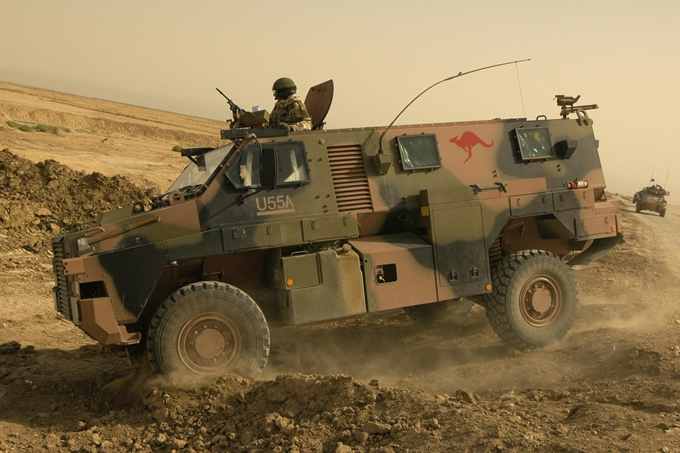
An Australian 'Bushmaster' Infantry Mobility VehicleThe picture we've shown on the left is the Australian Bushmaster Infantry Mobility Vehicle, currently in use in Iraq. It is an Australian designed and built vehicle, mine protected along the same lines as the RG-31.

It really has come to a pretty pass that we seem no longer able either to design or build our own armoured vehicles so that, while the MoD fritters away our money on Italian-built "battlefield limousines", our troops are still riding around in "Snatch" Land Rovers.

COMMENT THREAD