Tuesday, 20 June 2006

The wheels on the truck go round and round…

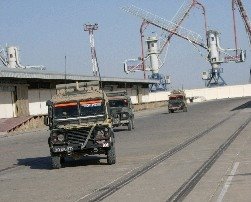
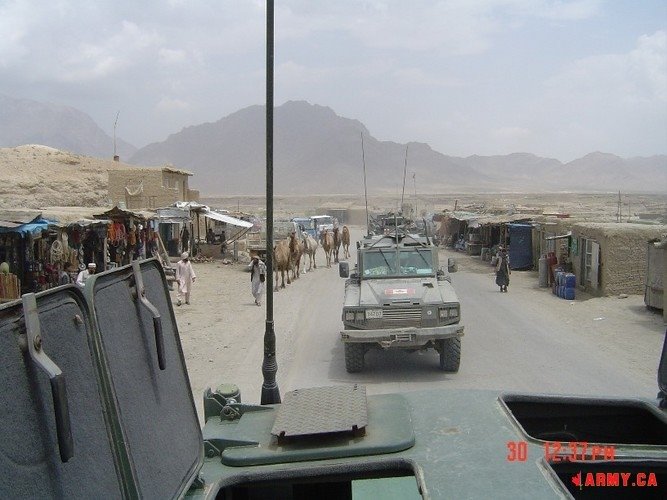
British Army Mambas in Bosnia

Following my post on Sunday on How Blair is killing our soldiers, the story – if at all possible – gets murkier and murkier. Before proceeding, however, I must thank all those website and blog owners who linked to the piece and the many readers who responded and are taking action. I will keep you abreast of the responses they receive.

And so to the story as we left it on Sunday, with an account of how Lord Drayson, the defence procurement minister, on 12 June this year had dismissed the idea of buying the mine protected RG-31s to replace the "Snatch" Land Rover. Not only did he assert that the "Snatch" provided us "with the mobility and level of protection that we need", he informed the House of Lords that:

We had 14 RG-31s in Bosnia, which we took out of service some time ago due to difficulties with maintenance. We have looked at the RG-31 alongside a number of alternatives for our current fleet and concluded that the size and profile did not meet our needs. Size is important in the urban environment. The RG-31 cannot access areas that Snatch Land Rovers can get to.
According to the minister, therefore – and there can be no other construction from his words – the RG-31s were basically too large for the "urban environment", hence the choice of the smaller Land Rovers.

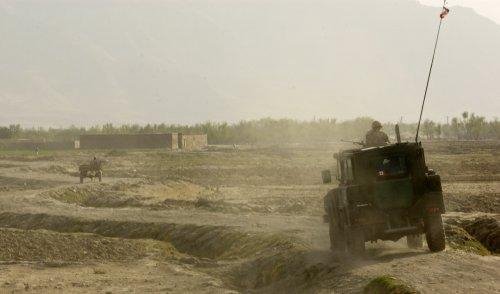
Well, as it happens, we have found a photograph of the "RG-31s" used by the British Army in Bosnia, which is reproduced at the top of this post. In fact, they were not RG-31s but Mambas, an earlier version of the vehicle – and even then they were not the standard body. They were, in fact, a rare, short-wheel-base version, variously known as the "Commanche" or "Acorn", converted by Alvis PLC, the British owner of the South African manufacturer. You can judge for yourself from the photograph how much of a handicap the size of these vehicles might be.

However, since "the size profile" did not meet the MoD needs, it was decided to replace the vehicles and, around 2002, an alternative vehicle was in the process of being procured. We know this because there was a Parliamentary Question on 5 February 2002 by Mike Hancock, Lib-Dem MP for Portsmouth South, from which we learn that the replacement was called a "Tempest". These were to be used for:

...casualty evacuation and route proving operations where mines are present and provide high levels of protection from anti-tank/personnel mine blasts.
Dr Moonie, who answered the question, was extremely reticent about the price, withholding information "in accordance with Exemption 7a(2) of the Code of Practice on Access to Government Information, which relates to information whose disclosure would prejudice commercial or contractual activities."
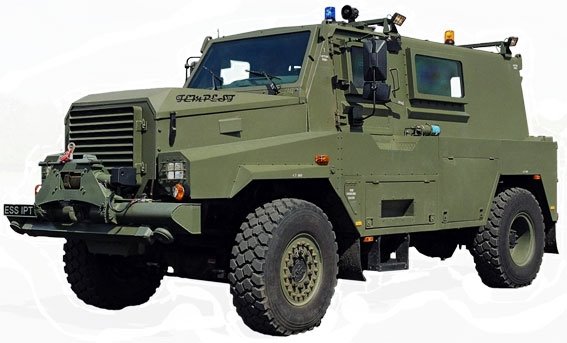
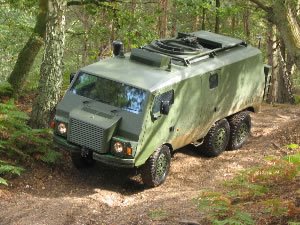
The Tempest MPVAnyhow, we also managed to find a photograph of the Tempest (left)and some details from the Royal Engineers website. Known officially as "Truck, Mine Protected Vehicle" (MPV), as readers will discern from the picture, this is based on the chassis of an articulated truck. The Royal Engineers describe it thus:

The MPV, formerly known as Project TEMPEST. The planned role of the MPV is route proving and casualty evacuation (CASEVAC). The donor platform for the cab and chassis services is the Peterbilt 330 articulated tractor unit. The front and forward rear axles were removed and replaced by a Marmon Herrington 4 Drive conversion. MPV is a modified Commercial Off the Shelf (COTS) equipment procured against an Urgent Operational Requirement (UOR) and replaces the MAMBA vehicle fleet of the mine protected vehicles. The vehicles were assembled by Technical Solutions Group in the USA with the UK EOD specific requirements incorporated by Supacat Ltd.
The MPV in actionThus we see the MoD, having decided that the Mambas were too big, decided to replace them – at unspecified expense – with a truck at least four times the size, buying fewer of them into the bargain, for use in exactly the same role. And so desperate was their need that they bypassed the normal competitive contract process and acquired the equipment against an "Urgent Operational Requirement".

Now it begins to get interesting, and not a little murky as we follow two separate threads.

First, we follow Technical Solutions Group. It is owned by a US company, Force Protection Inc, which currently manufactures a range of mine protected vehicles for the US Army and Marine Corps. More of this company later but what is most interesting at this stage is one particular member of the management team, a certain Murray Hammick (below left), who joined the company on 12 February 2004.

Murray HammickAlthough on the company website as late as 6 June this year, he has suddenly disappeared from the line-up. But, through the marvels of the Google cache system, his details are still accessible, and fascinating reading they make. As "Vice President, Integrated Logistics Support":

Before joining Force Protection, Murray Hammick owned and managed UK-based Seafire Ltd., developers of specialist military vehicles; he was centrally involved in the 2001 sale of the Tempest MPV to the UK MOD. He was head of business development for UK defense contractor Alvis Vehicles Ltd, handling sales, marketing and new product development roles involving the UK MOD, US DOD, NATO, and the UN. He set up and managed the first international transfer of mine-protection technology out of South Africa covering the Mamba series of MPVs, and was ground forces editor for Jane's International Defense Review from 1990-93.

Mr. Hammick is a retired British Army major. He served over 24 years in regular and reserve armored and airborne units and ran armor anti/armor research trials. Mr. Hammick holds a bachelor of science degree, and formal qualifications in military design & technology.
From a separate website, we also see that Hammick's job was to oversee and co-ordinate all projects at both Force Protection and its wholly owned subsidiary, Technical Solutions Group, reporting directly to Michael Watts, the Company's then CEO.

We also learn from this website that Hammick not only won the contract to sell MPVs to the British Army but, while working for Alvis, had been appointed Product Manager, responsible for developing two armored vehicles and one Special Forces vehicle. He subsequently established Seafire Limited and went on to win a number of contracts, including some in partnership with TSG and Supacat.

What this demonstrates is that the very technology that went into the Mamba and subsequently the RG-31 was exploited by Hammick and used in the production of the Tempest, for which the British taxpayer paid a no doubt handsome – if unspecified - price. We also know that, armed with the knowledge of that design and the experience of having built the vehicle, Hammick joins Force Protection.

With that under our belts, let us now follow the second thread – the Tempest itself. A search for information on this vehicle eventually leads you to this site, a general site on "vehicle protection". However, it does have an entry for the Technical Solutions Group (TSG), under which is an active link marked "Tempest". When you click that, you arrive here.

The Force Protection CougarSurprisingly, there is no mention at all of the Tempest. The page is headed "Cougar", a mine protected vehicle made by none other than Force Protection Inc. Furthermore, helpfully, there is a picture of the Cougar (right). As you will see, for all intents and purposes, the Cougar is the Tempest, designed and paid for by the British taxpayer and handed on a plate to the American company by Mr Hammick.

Force Protection is doing very well out of the deal. Not only has it already sold a considerable number of Cougars to the US forces, it has teamed up with none other than our very own BAE Systems to produce a variant called the Iraqi Light Armoured Vehicle, acquiring a recent contract from the US Army worth $180 million for 378 models, which could increase to $445.4 million for 1,050 vehicles, if all options are exercised.

From all accounts, the money will be well-spent. The USMC who already have the equipment, speak very highly of it. In addition, one crew gave written testimony to Force Protection of how it had undoubtedly saved their lives:

The Cougar after an IED hit
Just wanted to write a quick note to all of you at your company to thank you for the hard work you put into the Cougar vehicle. We are stationed in [omitted] Iraq and about 2 weeks ago our JERRV Cougar ran over [deleted] mine coming back from a call downtown. It had been raining that night and the mines were placed in a hole filled with water. Right after the explosion, the Cougar was driven for two miles on the three remaining tires at speeds in excess of 20 mph so that we could make it to a safe area.

Once we got to the safe area we were able to survey the damage and everyone was amazed how far the vehicle had driven. The three of us inside were all okay other than slight concussions and a headache that lasted a few days. We know that if we had been in another type of vehicle that the outcome would have been much worse. We were also able to get a replacement Cougar within 24 hours. Thank you for everything and keep up the good work.
If that does not tell the story, the photograph (above) provides adequate evidence of the life-saving capability of this remarkable machine. And, unlike the RG-31s where, since their introduction, three vehicles have been destroyed by IEDs and enemy action, with five fatalities, as of June 2006, with more than 130 Cougars and the similar Buffalos in Afghanistan and Iraq, the vehicles have taken about 1,000 IED hits without a loss of life.

So far, therefore, we see a life-saving vehicle, designed and developed at the expense of the British taxpayer, being successfully introduced into the US forces, while our own defence procurement minister declares that a much smaller vehicle, based on the same technology, is far too big for our troops. They must continue to use lightly armoured "Snatch" Land Rovers. Of the eight Tempests still presumably in service in the British Army, we know nothing of their whereabouts.

A Land Rover after a mine explosionIncidentally, when researching for what amounts to the first part of this story, I was puzzled by the absence of photographs of Land Rovers that had been hit directly by IEDs. I have since found one from a different conflict and can now see why. After a hit, there is often nothing left but smouldering wreckage, barely recognisable as a vehicle – compare and contrast (above right) with the picture of the Cougar above.

Even with this, though, the story does not end. To complete the saga we must go back to the British Army Mambas in Bosnia – those which the MoD was so eager to dispose of.

The Alvis ScarabWhile in the Balkans, the Army came across a new and more deadly type of mine – the TMRP-6 "shaped charge" mine - for which the Mambas provided no defence. A South African technology company therefore was commissioned to design counter-measures which were applied to the Mambas.

The lessons learned, however, did not stop there. Applying them and the technology that went into the RG-31, Alvis PLC set about building as a private venture a brand new, state-of-the art armoured patrol/ reconnaissance vehicle which emerged as the Scarab (above, left).

This vehicle was then offered to the MoD in the 2001 competition for the Army's Future Command and Liaison Vehicle (FCLV), alongside the RG-31 and its smaller brother, the RG32M and the Fench-designed ACMAT. We covered this competition extensively in earlier posts, here, here and here. Without revisiting all the details, suffice it to say that the MoD introduced another vehicle to the competition, the Italian-built Iveco Panther (below, right), after the shortlist had been closed in breach of its own rules. It then went on to select it as the winner, paying £166 million for 401 vehicles, equating to £413,000 each.
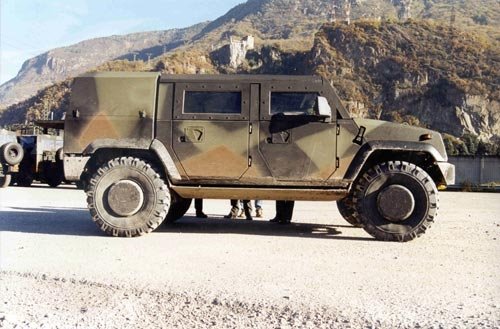
The Italian-built Iveco PantherAnd, as we now know, the MoD civil servant who was "the only person to have been intimately involved in this programme from initiation to contract award," a Mr Andrew Simpson of Bath, now works as a consultant for the Italian manufacturer.

Although a mine-protected vehicle in its own right, it is unlikely that Mr Simpson's Panther was any match for the Scarab – which has since disappeared after Alvis was taken over by BAE Systems. It is now marketing the Panther after it had been awarded the MoD contract for it.

While the Scarab, in its patrol or reconnaissance configuration, could have provided a valuable additional tool in both Iraq and Afghanistan – and given state-of-the-art protection - the Panther, barely if at all adequate as a command/liaison vehicle, would make a poor patrol vehicle. Not that the troops are likely to be given the opportunity to try it out. It is designated for the medium armoured brigades which are to form the heart of the British contribution to the European Rapid Reaction Force, in which Tony Blair has invested so much political capital.

With the money spent on this and other extravaganzas, there is no money left in the defence budget for new kit. British troops must make do with their lightly armoured "Snatch" Land Rovers. The US troops, on the other hand, can enjoy the comfort and security of their Cougars, designed and developed at British taxpayers' expense. But hey! What price soldiers' lives when European defence integration beckons?

COMMENT THREAD

Sunday, 18 June 2006

How Blair is killing our soldiers

A US RG31 after it has been hit by an IED.  The five-man crew survived
According to the official MoD website, as at 28 May 2006, a total of 113 British Forces personnel have died, or are missing presumed dead, while serving on Operation TELIC since the start of the campaign in March 2003. Of these, 84 are classed as killed in action, including as a result of hostile action.

Of those 84 dead, at least 23 – more than a quarter – have been killed riding or patrolling with unarmoured or lightly armoured "Snatch" Land Rovers, the most common cause of death being the improvised explosive device (IED), better known as the "roadside bomb".

A Land Rover patrol -backbone of the British effort in IraqThe incidents that I have been able to cull from the internet are as follows:

  • 14 August 2003: Two Queens Lancashire Regiment soldiers wounded and one – Captain David Jones – killed in bomb attack on a converted Land Rover military ambulance in Basra.
  • 18 November 2003: MoD spokesman Charlie Mayo reports two man crew of one Land Rover injured in one of four booby trap bomb attacks over previous seven days.
  • April 17 2004: Two Territorial Army soldiers shot in Basra and another soldier lost a leg when his Land Rover was hit by a rocket-propelled grenade.Another Land Rover patrol - note the confined spaces
  • 18 April 2004: Three PWRR soldiers injured, one seriously, in roadside bomb attack on Land Rover in Amarah.
  • 26 April 2004: One soldier injured by roadside bomb attack on six vehicle supply convoy in south east of Basra. Witnesses said the injured soldier was evacuated by helicopter.
  • 28 June 2004: Fusilier Gordon Gentle, 19, from Glasgow, died when a bomb exploded next to his Land Rover in Basra. Two others were injured.
  • 9 August 2004: Five soldiers from Prince of Wales Royal Regiment were injured and one – Private Lee O'Callaghan – was killed in attack on vehicles in Basra. Two Land Rovers were set on fire after militiamen fired rocket-propelled grenades at the patrol.
  • 28 September 2004: Two soldiers – Corporal Marc Taylor, Royal Electrical & Mechanical Engineers, and Gunner David Lawrence, Royal Artillery – killed when military convoy ambushed south-west of Basra. The two soldiers killed had gone to the aid of injured colleagues whose Land Rover was hit by a rocket propelled grenade (RPG).The aftermath of an attack - note again the confined spaces
  • 2 May 2005: One soldier injured and Guardsman Anthony John Wakefield 24, from the 1st Bn Coldstream Guards, killed during routine two vehicle armoured Land Rover patrol in Al Amarah.
  • 29 May 2005: Lance Corporal Alan Brackenbury of The King's Royal Hussars killed from an improvised explosive device in Kahla, near al-Amarah. He was in an armoured Land Rover, one of three vehicles heading to a liaison meeting with representatives of the Iraqi security forces. Four other soldiers were injured in the explosion.
  • 16 July 2005: Two soldiers injured and three killed - Second Lieutenant Richard Shearer, Private Leon Spicer and Private Phillip Hewett - all from the 1st Battalion the Staffordshire Regiment, during three vehicle armoured Land Rover night patrol in suburb of town of Al Amarah, 160 miles north of Basra.
  • 5 September 2005 A roadside bomb killed two British soldiers travelling in an armoured Land Rover in southern Iraq. The device exploded as a convoy passed through a mainly Sunni Arab district five miles east of a British army base known as Shaiba. The two dead soldiers were from the 2nd Battalion Royal Regiment of Fusiliers, based in Lisburn, Northern Ireland.And another burnt-out wreck - and confined spaces, once again
  • 11 September 2005: Three soldiers were injured and Major Matthew Bacon was killed when an armoured Land Rover was hit by an IED in Basra.
  • 20 November 2005: Four soldiers injured, one very seriously, in bomb attack on routine two vehicle armoured Land Rover patrol in northern Basra. Sergeant John Jones of the 1st Battalion The Royal Regiment of Fusiliers died in the attack.
  • 31 January 2006: Whilst on a routine patrol in Umm Qasr, the vehicle that Corporal Gordon Pritchard was commanding was struck by a roadside bomb; he died instantly. Three other soldiers were injured, one seriously, in the same incident and received medical treatment at Shaibah medical facility.
  • 28 February 2006: Two British soldiers were killed and another injured when their Land Rover was blown up by a roadside bomb while on patrol in the Iraqi town of Amara. The three soldiers were from 2nd Battalion The Parachute Regiment attached to the Royal Scots Dragoon Guards. The improvised explosive device is believed to have been hidden in an abandoned car which exploded when the soldiers passed on routine patrol.
  • 16 April 2006: Lt Richard Palmer, 27, of the Royal Scots Dragoon Guards was killed when his Land Rover was targeted by insurgents using an off-road mine near the town of Ad Dayr. Lt Palmer's unit, which was attached to a Danish battle group, was on vehicle patrol with the Iraqi army when it was attacked.And the all too common tragic result
  • 13 May 2006: Two British soldiers died after a roadside bomb attack in southern Iraq. The soldiers, from the 2nd Battalion Royal Anglian Regiment, were on routine patrol in an armoured Land Rover just outside Basra when the device exploded. The roadside bomb exploded as the patrol approached a bridge just north of Basra. A third soldier was injured in the same incident.
  • 28 May 2006: A British Army patrol from 1st The Queen’s Dragoon Guards (The Welsh Cavalry) was attacked by a roadside bomb in the Al Jezaizah district of North West Basra. The explosion hit an armoured Land Rover patrol on a routine task in support of the Iraqi Security Forces. The incident killed two members from A Squadron: Troop Leader Lieutenant Tom Mildinhall and Lance Corporal Paul Farrelly.
  • Collectively, the Land Rover incidents are the single most common cause of death for our soldiers in Iraq, yet - in our view - they are largely preventable. In today's Sunday Telegraph, based on research carried out by this Blog, Christopher Booker explains why they are allowed to happen.

    "One reason why British troops continue to be killed and injured in southern Iraq", he writes, "is that they are expected to patrol in lightly-armoured Land Rovers which give them no protection against roadside bombs and rocket-propelled grenades." He continues:

    Meanwhile their American counterparts walk away unscathed, even when their RG31 armoured patrol vehicles are hit by the same explosives, because these are designed to protect them against precisely the same dangers. Yet the Ministry of Defence has not seen fit to equip the British Army with the RG31, even though it is built by a British-owned company.
    That self-same RG31 is pictured at the top of this piece – taken at Camp Taqaddum, Iraq on 7 January 2006 by a photographer from the 8th Engineer Support Battalion, 2nd Marine Logistics Group. It is resting on its front axle after an improvised explosive device detonated under the vehicle the day before. The IED detonated directly under the vehicle; however, because the vehicle was an RG-31, the blast was pushed outward instead of straight up due to the unique v-shaped undercarriage. Of the five service members in the vehicle, two received concussions and two others received minor burns.

    Before continuing with Booker it has to be said that the government's procurement minister, Lord Drayson, does not agree that the RG31 should be used, or that there is anything wrong with the "Snatch" Land Rover. In the House of Lords on 12 June this year, in response to a question by Lord Astor of Hever, this is what he said:

    My Lords, I do not accept that Snatch Land Rovers are not appropriate for the role. We must recognise the difference between protection and survivability. It is important that we have the trade-offs that we need for mobility. The Snatch Land Rover provides us with the mobility and level of protection that we need.

    We had 14 RG-31s in Bosnia, which we took out of service some time ago due to difficulties with maintenance. We have looked at the RG-31 alongside a number of alternatives for our current fleet and concluded that the size and profile did not meet our needs. Size is important in the urban environment. The RG-31 cannot access areas that Snatch Land Rovers can get to.
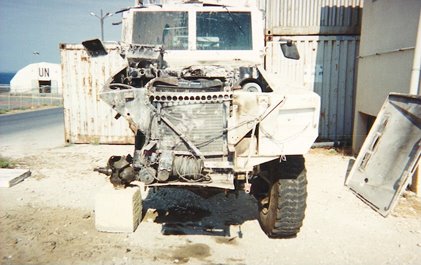
    Another survivor - a mine-damaged UN RG31You may accord to Lord Drayson's statement any value you wish but it is germane to note that the vehicle is widely used in the world's trouble-spots, to which effect, one of its enthusiastic users, the United Nations, reports:

    The RG-31 "Nyala" mine and bullet-protected vehicle (MPV) with high mobility ease of handling and good crew comfort has been successfully deployed with the UN in Bosnia and Lebanon. It has become the MPV of choice of the UN and other peacekeeping and security forces and is finding favour with nongovernmental organizations requiring vehicle with nonaggressive appearance to protect their personal against the threat of landmines.
    More to the point, in addition to the United States which has purchased 148 for use in Iraq, the Canadian forces have bought 50 for use by their detachment in Afghanistan, with an option for another 25, having previously deployed three as part of their contribution to the International Security Assistance Force in Afghanistan.

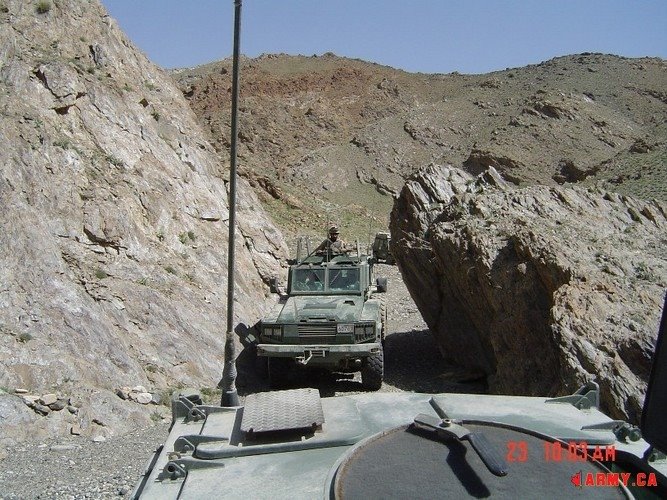
    A Canadian RG31 in Afghanistan - and in confined spacesThe vehicle was selected after a tightly-fought contest with other mine protected vehicles and, in the view of one commentator, won the contract because: "Familiarity aside, the RG-31 had advantages that all but ensured victory in the CF's APV contest – proven performance in a range of climates and terrains, relatively small size."

    Known variously as the "Mamba" and "Nyala" in Canadian service (the two are, in fact, different although very similar vehicles, the latter being the RG31), it has attracted the enthusiastic plaudits of its users. Says one:

    Having spend lots of time in both the Mamba as a Recce Driver on Palladium Roto II and the Nyala as the Engr Recce Sgt on Athena Roto III, I can't think of a more well rounded, safer and rugged vehicle.
    and another…

    Almost every contingent I worked with would have given their left arm for a Nyala, including those riding around in open top G-wagons. Open top vehicles bristling with weapons are no deterrent or concern to a pressure plate IED or a Spider Device initiated by a Cell Phone or FRS from a safe distance. The only CF Troops in the Kandahar area that require open top soft skins already have them. So if you really want to ride around in one, start doing your application for the farm.
    Lord Drayson offers no explanation as to what the "difficulties with maintenance" were, although it is hard to understand why they should have been intractable, since the vehicles used (Mambas) had running trains based on the widely-used Mercedes Benz Unimog and the design employs many readily available commercial parts.

    Another Canadian RG31 patrolAs to the importance of size, and Drayson's claim that, "the RG-31 cannot access areas that Snatch Land Rovers can get to," once again you can judge for yourself from the photographs provided. Altogether, we prefer the explanation that the Army is being short-changed, fobbed off with cheap, second-hand Land Rovers, designed for security operations in Northern Ireland and totally unsuited for Iraq.

    Returning to Booker, he writes:

    This is a small but chilling example of the extraordinary shambles the MoD is making of Britain's defences, thanks not least to the way Tony Blair is trying to pursue two totally contradictory policies at the same time, This has not been properly appreciated because media coverage of defence has become so scrappy that we have lost sight of the overall picture.

    We hear, for instance, about prosecutions of British soldiers for supposed "human rights abuses", the abolition of ancient regiments and some of the more ambitious defence projects on which the MoD is spending tens of billions of pounds, such as the Eurofighter or the two giant aircraft carriers planned for the Royal Navy. But no one fits all the pieces of this jigsaw together.

    On one hand, as we saw yet again with his recent visit to Washington, Mr Blair tries to keep in with the Americans, by committing thousands of hard-pressed and ill-equipped British troops to fighting the insurgencies in Iraq and Afghanistan. Bush and Blair still like to talk of keeping alive the Joint Strike Fighter project, the last major example of Anglo-US collaboration on military hardware.

    On the other, as we saw again with his subsequent visit to President Chirac, Mr Blair has stealthily agreed to Britain playing a key role in the planned European Rapid Reaction Force. For this he and the MoD have been prepared to restructure the British Army, scrapping the old regiments, and to commit colossal sums to buying every kind of European equipment, as well as those giant carriers we are to build with the French. All this is to meet the "Helsinki goals" agreed by EU leaders including Mr Blair in 1999, by which an integrated European defence force is to be brought about.

    For the MoD, the top priority has been to get on with meeting those Helsinki commitments, co-ordinated by the European Defence Agency in Brussels, headed by a former senior MoD official Nick Witney, which will enable us to play our part in creating that EU expeditionary force. To this end the MoD has been prepared to spend billions on EU-made missiles, ships, trucks, artillery and armoured vehicles, not to mention a French-led project to build unmanned aircraft which Blair discussed with Chirac earlier this month, following Britain’s withdrawal from a similar joint-project with the US.

    But what this has left is a British Army starved of proper resources for its current tasks, so overstretched that it must rely on thousands of territorial soldiers, its morale sapped by the dangerous lack of proper equipment and by the MoD's insistence on enforcing the European Convention on Human Rights in situations to which it was never intended to apply.

    The real problem is that all this has been so hidden away behind layers of stealth and deception that no one ever asks any longer that fundamental question: what are our armed forces for? Behind the scenes, the driving force of national policy is to fit us to play our part in building up a European expeditionary force, capable of operating anywhere in the world. But no one can explain the purpose of such a force, for essentially it has only one: to promote the cause of European integration.

    This leaves us, in an increasingly darkling world, with forces ill-designed to protect any national British interests. Indeed, so dependent are we now becoming on equipment bought from our EU partners, including our most basic guns and ammunition, that it will soon be inconceivable that we could operate without their consent.

    Meanwhile our armed services, which until recently we still prided ourselves on being the most professional in the world, are being asked to perform dangerous tasks, knowing that they no longer have much practical support from a Government bent on exploiting them politically, for purposes they find it increasingly hard to understand.

    When the final charge sheet is drawn up against the way Mr Blair governed this country, one of the most damning charges will be the way in which he destroyed its armed forces. Yet the remarkable thing will be how almost nobody at the time noticed it was happening.
    Booker's final comment hits the nail on the head. We have tried to get senior Conservative MPs interested in this issue with very little success. And, apart from Booker and The Business, it is proving impossible to get the media interested.

    Well, people, this is an opportunity to test the power of the blogs. We have not done this before, but I would ask other blogs to link here and for readers to print off this post and send it to their MPs, with their own comments. As I wrote in the heading, this is truly a matter of life and death. Our view is that our troops are being needlessly exposed to danger and they deserve better. We hope you agree.

    COMMENT THREAD

    Saturday, 3 June 2006

    Are we a nation of mummy's boys?

    Maj Gen Andrew RitchieI am sure Maj Gen Andrew Ritchie, the retiring commandant of Sandhurst – with a pint in his hand and in decent company – would have some quite interesting views on the fate of the British Army. Short of that, a knowledgeable media interviewer could, I am sure, elicit some interesting observations, that would be worth reading.

    That could have been a task for the Daily Telegraph but, instead they sent one of their girlie reporters to talk to him, in this case the stunningly ignorant Rachel Sylvester – with predictably dire results.

    It thus takes forever to get past the "human interest" garbage – the General is taking a plumbing course… yeah! – and the compulsory trivia about the Royals, before we get to a half-way illuminating comment. With four officers who graduated from Sandhurst during Gen Ritchie's time having died in Iraq in the past year, recruitment, says Ritchie, is being damaged – something the MoD has always denied.
    "There's a 'mum' factor," says the General. "Mums find Iraq deeply unpopular. They are concerned that their youngsters will be exposed to real risk and danger. And mums are hugely influential in boys and girls joining the Army."

    That is a worrying development, if kids are making up their minds on the basis of what "mum" thinks, which certainly suggest something of a "mummy boy" syndrome afflicting our society. Such a nation cannot survive long as a credible military power if parents cannot let go, and the prevailing ethos is to avoid military commitments because of the risk of casualties. Would we, for instance, have fought Hitler in such circumstances?

    In this context, there was a highly relevant commentary in the Telegraph's letters yesterday which touches on a debate which has yet to be seriously aired in the mainstream media.

    A Land Rover 'Snatch' in IraqThe letter is from Martyn Pocock, of Oakham, Rutland who records his sadness at the deaths of more of "our gallant servicemen who were serving with distinction in Iraq" and then goes on to write of his "despair, consternation and outrage" on reading yet again on the MoD website that the deaths were as a result of an improvised explosive device attack on "armoured Land Rovers".

    "On how many more missions will our troops have to go in vehicles that were essentially designed for Northern Ireland?", Mr Pocock asks. "How many more deaths will there be before the government is held to account for not providing the money for equipment that is fit for the role?"

    He then concludes, "The 'Snatch Land Rover' may have been armoured in the context of Northern Ireland, but it certainly is not in the context of Iraq and Afghanistan."

    It would have been very interesting indeed to have heard Gen Ritchie's views on this subject, and I am sure his answers would have been highly illuminating, except that, if Sylvester put such questions to him, neither questions nor answers were published. More likely, the girlie Rachel would not have the first idea what a "snatch" was, other than a street mugging where she lost her handbag, and would not have even thought to have asked about something so "technical".

    But it is issues like these that go to the heart of our defence strategy. They beg the question that, if we are to commit our troops to what Ritchie calls a "counter-insurgency situation" and, because of the "mum" factor, we are not prepared to sustain losses, how should we equip them, and at what cost?

    The armoured Pinzgauer - destined for AfghanistanNor even are those easy questions to answer. Mr Pocock implies that we should have better armoured vehicles and, certainly, the MoD has got the message with the emergency purchase of 80 armoured Pinzgauers for our detachment in Afghanistan – although there is no hint of or troops in Iraq being similarly equipped.

    But one has to ask whether armoured patrol vehicles are necessarily the answer. We have seen in the US area of operations the progressive introduction of up-armoured Humvees, the insurgent response to which has been to increase the power of their roadside bombs and to use shaped charges which are capable of defeating the heaviest of armour. Then, there is the ever-present threat of the RPG, which can destroy an armoured Pinzgauer.

    The risk is, of course, that the Army, in seeking to protect its troops, gets locked into an increasingly expensive spiral of measure and counter-measures, building ever-more better armoured vehicles, only for the insurgents to deploy even more lethal weapons and tactics. But the greater possible risk is that, as they are encased in ever-thicker layers of armour, the troops become even more insulated from the populations they are policing. They then lose the battle for "hearts and minds" that is at the heart of any counter-insurgency effort.

    A US Buffalo - an armoured 'minesweeper' - deployed in IraqTaking a more holistic view of the problems presented by the complex counterinsurgency challenges of Iraq, the US has come to realise that there must be a multi-layered response. At the high end, this includes the use of unmanned aerial vehicles to patrol the roads and detect suspicious activity, to heavily armoured "minesweepers" such as the Buffalo, which can investigate roadside packages, and artillery radar to pinpoint hit-and-run mortar attacks.

    At the low end, there are all manner of activities, from foot patrols, liaison and goodwill visits, training missions and what is known collectively as "humint" – human intelligence - the use of informers and the local population to provide detail on terrorist activities and their whereabouts.

    It is here, in the absence of much of the "high-end" equipment that the Americans enjoy. that the British are supposed to excel, with their "soft hat" patrols and their rapport with the local population. But, as we know, the situation has gone belly-up in Basra. It is best described as "tense" leaving our troops ill-equipped to deal with the hostilities.

    Here, though, it is not just a question of our troops being provided with inadequate equipment – or none at all. For instance, the MoD has drastically reduced its expenditure on language training so that most troops about to embark receive only a two-hour language "familiarisation" lecture. What price "hearts and minds" when you cannot speak to people in their own language and have to rely entirely on translators?

    If our government wants the Army to do a job, then it must provide it with the right equipment and ensure that troops have the right skills and capabilities – and are present in numbers sufficient for them to be able to fulfil their tasks. And therein lie those central questions. What do we actually want our troops to achieve? What equipment and skills do they need to perform? And are we prepared to pay what it takes, both in blood and wealth?

    These are important questions. Mr Pocock touched on one aspect of them but the media does not seem interested in expanding on them or adding to them. Instead, we get told about the "mum" factor, while the media retreats into banalities and trivialities. But, if we really are becoming a nation of "mummy's boys", should we be there at all? Should we have an Army at all, or would we be better off joining with the "soft power" Europeans, and let some real men (and women) do what is needed?

    COMMENT THREAD
    Friday, 2 June 2006

    Bizarre

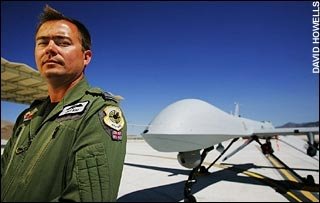
    Preening with the Predator - the Telegraph 'take'We have remarked on several occasions on the "Boys Own" tendency in the media, in the way they treat defence issues. A better example of this could hardly be found than in a gushing two-page spread in the news section of the Telegraph today, chronicling the deployment of Predator UACVs by the RAF in Iraq.

    Apart from the fact that this is hardly news – the MoD has been leasing Predators from the US for the best part of two years, to my recollection – such is the superficial nature of the story that it lacks any of the analytical bite that might be expected of a serious newspaper. It might, for instance, have questioned why it is that the UK finds it necessary to hire UAVs, in which event it might have stumbled on the much more interesting story of the abysmal failure of Britain's own programme.

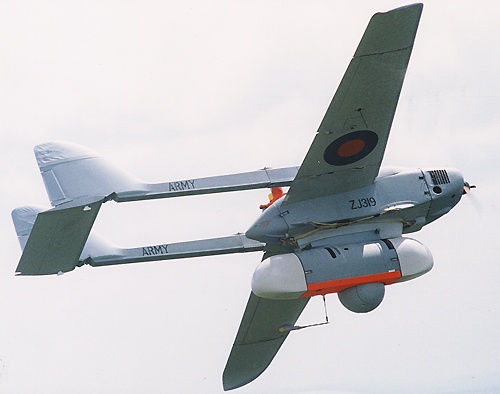
    This is the story of the Phoenix, a drone with such embarrassingly poor hot weather performance that it failed entirely to deliver. Yet, oddly enough, this was reported by the Telegraph in November 2002, which told us that an upgrade to allow high temperature operations had been cut "to save money", something that the paper then branded "ill-considered".

    The flight of the Phoenix - notIt is due that that "ill-considered" economy that we had to go cap-in-hand to the Americans to lease Predators, until the Phoenix replacement comes into service – the Watchkeeper - not expected until 2010 at the earliest, at a cost unspecified yet likely to be substantial.

    And only hinted at in the Telegraph story is the problem that the Predators are regarded as "theatre assets" so that, while we are paying for the leases, and making our own personnel available to operate them, they are tasked according to coalition priorities, which means they are often unavailable for British use.

    Such is the juvenile approach of this once serious newspaper to such issues that it is hardly surprising that our population is so ill-informed and the government gets away with so much.

    COMMENT THREAD

    Monday, 22 May 2006

    Can he deliver?

    Dr Liam Fox"What is the point of defence?" That is the question asked by shadow secretary of state for defence, Liam Fox, in a speech this morning at Chatham House on "the challenge of defence and energy security".

    In his speech, Fox turns the defence issue into one of protecting our energy supplies, pointing out that we are no longer self-sufficient in energy. Therefore, he says, energy security now acts as a driver of foreign policy and, in defence terms, we have to "balance our security through … effective military structures to underpin our diplomacy".

    That much is hardly new – it has always been thus – and it is thus self-evident that, as Fox says, "an indivisible energy security and national security policy will inevitably have consequences for the necessary shape and capabilities of the armed forces required to serve those interests". Fox then goes on to declare, very much in the same vein, that:

    Politicians need to provide a very much clearer framework within which national security interests can to be served. In other words. We need a foreign policy out of which a credible defence policy – rather than merely spending plans – can flow.
    So far, so good but what Fox then dismally fails to do is set out in any detail – or at all – the specifics of that framework, or how it would impact on our current defence policy.

    What he does tell us is that he wants to develop global associations with nations and regions that can contribute to countering the key threats to our energy security, directed primarily through NATO – something which he acknowledges would put us at odds with EU ambitions. But as to our defence policy, all we get is that our approach to energy security must be "underpinned by a security margin of resilience which only updated global military structures can provide".

    What that actually means is anyone's guess – and is it any wonder that we are so despairing (and contemptuous) of politicians when they cannot express themselves with any clarity? But, insofar as there is any meaning in the words, Fox seems to be making a pitch for greater seapower to protect our energy supply lines, working closely with a range of allies that includes the USA, Japan, and other players within the Pacific region.

    If that is the case, Fox has a problem. The bulk of our future naval equipment plans, including the purchase of the two aircraft carriers – for which further design contracts were recently awarded - are currently predicated on building up an expeditionary force to support the European Rapid Reaction Force, a force which is (or will be) primarily dedicated to fulfilling Petersberg Tasks.

    This is not a force which will be capable of projecting seapower or one with any significant independent global reach – and neither is it one designed to mesh with US or Pacific forces.

    As to the Army, huge expense – some £16 billion - is being devoted to re-equipping it as an expeditionary force, with a rapid reaction capability, again with a view to it becoming a component of the ERRF. The RAF, on the other hand, is primarily equipped (with the Eurofighter) for a static, air superiority role.

    None of the intended armed forces structures would seem at all capable of undertaking the primary role of protecting our energy supply lines and, given the necessary limitations on our defence spending – and the huge cost of equipping a credible expeditionary force – we do not have the cash to spare for both roles.

    It is all very well, therefore, for Fox to argue the need to provide a much clearer framework but, as it stands, the framework set by the current administration for future conduct of operations is that of an integral part of the ERRF.

    From that stems procurement decisions with a multi-billion price-tag and a reach of twenty years or more, committing us to the strategy thus defined. Unless Fox is prepared to gainsay the current structures and commit to a fundamental restructuring of our forces, should the Conservatives gain power, what he is actually saying is so much hot air - he will not be able to deliver.

    COMMENT THREAD

    Thursday, 23 February 2006

    The ultimate indignity

    Not a murmur could be heard when the British Army decided to buy Austrian-built MAN trucks for its supply fleet, or Italian-built Panther liaison vehicles. That the new army is to be supplied with Swedish-designed armoured vehicles, fitted with French-built guns firing ammunition manufactured in France is a mere detail.

    Who cares that our anti-battery radar is made in Germany, that the air-to-air missiles to equip the four-nation Eurofighter are French designed, as indeed are the missiles fitted to our Type 45 destroyers? And what does it matter that our new "bunker-buster" missiles are German, as indeed is the Royal Navy's mine-counter-measure equipment?

    Why should we be bothered that we no longer have a capacity to design and manufacture even the rifles with which our troops go to war, that the bullets they fire are contracted out to foreign firms and the shells are made in Germany, while the troops themselves will fight in Chinese-made uniforms?

    But there are limits chaps and, according to The Scotsman, those limits have been reached. "Shock! Horror! Probe!", screams The Scotsman: "Scots super-regiment to be kitted out in foreign kilts".

    And right behind the newspaper is Jeremy Purvis, Borders MSP, who says, "The kilts are clearly going to be sub-standard. Now there will be different cuts and shades on parades and it will be an embarrassment. The ceremonial Scottish wear of kilts and trews should absolutely be made in Scotland."

    In detail, it appears that the British Army has lowered the standards required of ceremonial kilts for the new amalgamated Scots regiment so that they may be manufactured from cheap tartan made abroad. In "an effort to drive down costs", the Ministry of Defence has announced it is putting the contract to produce tartan for the amalgamated Royal Regiment of Scotland up for tender.

    It is also, says The Scotsman, lowering the standards of the tartan's quality to allow other companies producing cheaper, lower-grade cloth to compete against the expertise of Borders textile companies. The MoD has launched a competitive tender allowing any manufacturers to compete for the contract of 5,000 kilts, estimated to be worth £300,000, for the new regiment.

    And there you have it. It is perfectly all right to have our armed forces totally in hoc to foreign suppliers, to such an extent that we cannot so much as put a foot ashore on a foreign land without their governments' agreement. But even think about having Scottish regiments in foreign-made kilts and all hell breaks loose.

    COMMENT THREAD

    Wednesday, 22 February 2006

    A MARS away…

    In DefenseNews this week, we see a story headed: "No UK Shipyards Picked for MARS Program", a headline – or anything like it - I guarantee you will not appear in the MSM.

    Very few people, in fact, will know anything of the MARS programme and many would be puzzled by the reference to shipyards, believing that it somehow related to an aspect of the space programme.

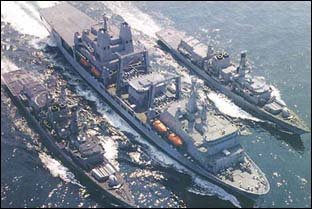
    However, we are dealing with yet another of these awful acronyms which, in this case means "Military Afloat Reach and Sustainability", a £2.5 billion MoD project for replacing and upgrading the support fleet which keeps the Royal Navy supplied while at sea, examples of which are ilustrated.

    What brings this project to the forefront is that, after a delay in the decision to award development contracts – which we reported last October - the MoD's Defence Procurement Agency (DPA) has now announced its selection of three companies to compete for the role of project integrator on the project.

    Crucially, no British military shipbuilding company has been selected, the companies announced, reports DefenseNews, being the British project management company AMEC and two US giants: KBR, an offshoot of Halliburton; and Raytheon Systems. The UK shipbuilders BAE Systems and the VT Group were rejected. But then, so were the French-owned Thales UK, Maersk and Houlder Offshore.

    The appointment of "project integrator", in itself, gives no clues as to where the ships will be built. The "integrator" is a fairly new development in defence procurement, involving a company which essentially acts as a surrogate purchaser for the MoD, pulling together all the disparate parts of a project and delivering the completed systems to their user – in this case the Royal Navy.

    The "systems" we are looking at here is a complete fleet of logistic ships for the Royal Fleet Auxiliary, although the numbers and types so far have not been defined. But it is expected that about eleven ships will be built, ranging from oil tankers to sophisticated forward aviation support vessels and joint sea-based logistic ships able to support expeditionary forces ashore.

    And while it has not been which companies will build the ships, the strong suspicion is that they will be built offshore. Lord Drayson, stated on 15 February that British warship yards seeking the orders would have to achieve efficiency levels similar to commercial rivals overseas.

    This, in effect, is a strong signal that these ships will be foreign-built, following the precedent set by the order of a fisheries protection vessel last year by the Scottish Executive, which went to a Polish shipyard in preference to a local Scottish firm.

    Industry analysts say that, while BAE and VT have greatly improved efficiency, they cannot offset the substantial advantages commercial builders find in low-wage economies like Poland and Romania. In 2002, BAE delivered two 30,000-ton fleet tankers to the Royal Fleet Auxiliary for £110 million apiece. This time, the DPA has set aside only about £80 million for each of the 25,000-ton oilers.

    This very much underlines the thinking set out in the recent Defence Industrial Strategy, which opened the door to less complex vessels like auxiliary and support vessels going overseas to reduce costs.

    If, as expected, the construction does go offshore, to one or more European yards, it will mark yet another step in the gradual Europeanisation of our military supply programme.

    The problem for us, on this blog, it that rational arguments can be expounded for this, and many other defence procurement projects being resourced offshore.

    In this case, particularly, there is no question that Polish or other European yards would be able to build these ships far more cheaply than our domestic yards. Further, our remaining military shipbuilders are undoubtedly stretched by the current Type 45 programme and the coming carrier project, so it could be said that there is little spare capacity for this project.

    Nevertheless, whatever the individual justifications for specific projects – each one of which may be valid taken in isolation – there is definitely an observable and undeniable trend.

    Basically, the evidence that we have offered on this blog is that government is committed to Europeanising the equipment of our armed forces, in pursuit of which - whenever possible – it will purchase European-built (or designed) equipment, even where a domestic supplier is available or a non-European product is considerably cheaper or better-performing.

    There are, however, exceptions to this rule, and these seems to be: i.) where there is no suitable equipment available from a European supplier; ii.) where the equipment is part of an overall "heritage" system, when changing over to a European supplier would cause massive disruption, technical difficulties or vastly increased expense; and iii.) where a European venture has failed to deliver and the equipment is urgently needed.

    If the MARS ships do go to European yards, therefore, it does seem as if we will be looking at more of the same, the continuation of a real, but much denied policy of Europeanisation.

    COMMENT THREAD
    Thursday, 2 February 2006

    A retreat from defence

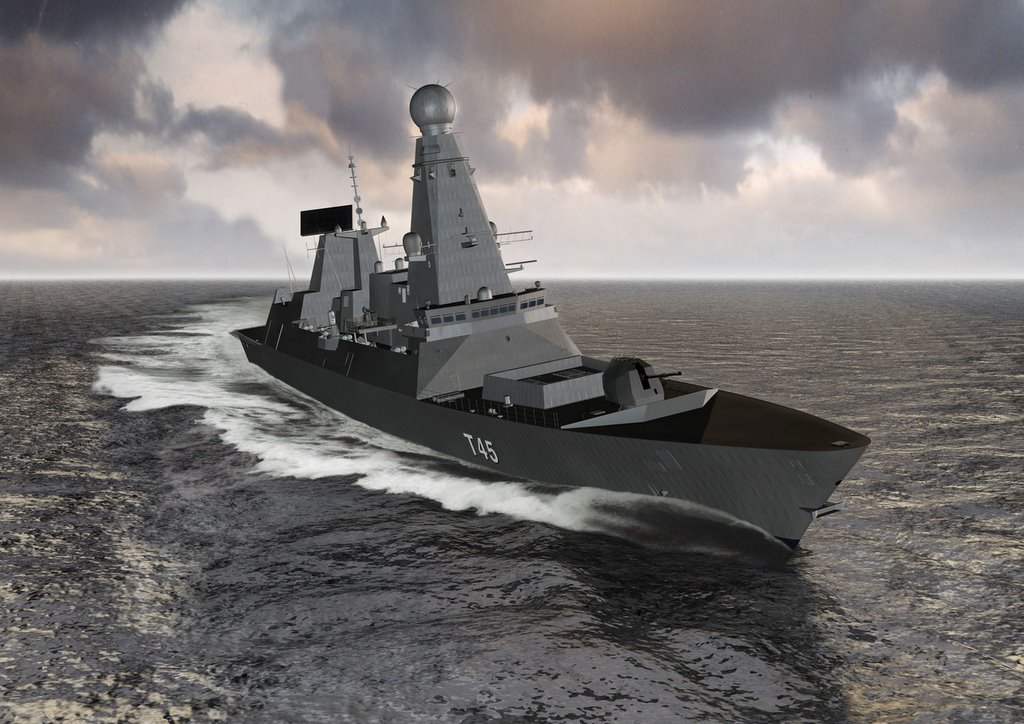
    So it came to pass that yesterday, 18 months behind schedule and hugely over cost, that the first of the Type 45 Destroyers HMS Daring was launched on the Clyde, to fanfares and applause, in front of an audience of 11,000.

    But, if the most expensive white elephant in the history of the Royal Navy has just been launched, you would have got no hint of that from the media, and especially from The Times, which headlined, "Navy launches deadliest and most expensive warship". And, according to The Times, it was "on time and within budget".

    Even within the framework of its own story, The Times could not manage to be consistent, declaring in the first line that HMS Daring was "the first of the Royal Navy's £6 billion fleet of six Type 45 Destroyers", then stating further down that it had "a price tag of £605 million".

    It then went on to state that the Type 45s "will be the most powerful, advanced and deadly warships in the world when they come into service in 2009", something which is simply and demonstrably not true.

    For sure, it will have a highly advanced anti-aircraft system, based on the costly French-built PAAMS missile and British designed Samson radar, but very little else. It will have only a very limited land attack capability, mounting a 4.5 inch gun, and – apart from its single helicopter - an anti-submarine capability that amounts to no more than a self-defence system, and no anti-shipping capability.

    Compare and contrast with the US equivalent, the DG Arleigh Burke class, which, in addition to its perhaps not quite as effective anti-aircraft capability (with nearly double the number of missiles) has a significant land attack capability - being able to launch Tomahawk cruise missiles - an anti-shipping capability and world-beating anti-submarine warfare equipment.

    And not only is it truly a formidable, multi-purpose warship, it comes in, as the Australians found, at £400 million less than the £1 billion price tag for the Type 45.

    But if The Times report was useless, it was matched in fatuity by the BBC, although it did manage to confine its hyperbole to describing HMS Daring as the UK's most powerful destroyer – which, when it comes into service, will be true, as it will be the only type of destroyer we have. The BBC too bought the "price tag of £605 million" line, but later giving the total programme cost for the six ships as £5.5bn.

    The Sun, totally out of its depth, reported the cost as £6 billion – but for eight ships, not six, describing HMS Darling as "the deadliest ship ever built".

    Even the dour Scotsman described it as "one of the world's most advanced warships" and then went on to call it a "multi-role ship", which it clearly is not in any realistic sense of the world.

    As for The Telegraph, it called the ship, "the most powerful frontline warship since the Second World War", but at least limiting the description to "the world's most advanced air defence ship," then – for heaven's sake – calling it a boat, claiming that, according to BAE Systems, its builders, its "hugely powerful radar and missile system, has left American visitors to the yard 'shaken and shocked'". I think not.

    It took Jane's to point out that this class of ship should have been in service in 2000, delayed by the abortive French-Italian co-operative venture, which cost us a small fortune when we had to refit the obsolescent Type 42s which should have been replaced.

    The average MSM reader, however, will walk away thinking that Britain has been well served, not realising that, in a Navy that is shrinking faster than a bank balance in the hands of a shopaholic, we cannot afford the luxury of overpriced, effectively single-purpose ships. We could have had far more capable, multi-purpose ships, for a saving on six vessels of £2.4 billion – the price tag for a new carrier.

    If we had a grown up media, these issues would have been raised but instead, in its infantile, pathetic way, all it has been able to do is affirm that its has retreated from reporting intelligently on defence issues.

    COMMENT THREAD
    Thursday, 24 November 2005

    The mystery deepens

    As a result of researching the labyrinthine issue of defence procurement, readers will know that we have concluded that the MoD appears to be exhibiting a strong "Europe first" bias when it comes to major contracts for our armed forces.

    But, as we indicated in a post, a couple of days ago one cannot also rule out the possibility of corruption affecting the choice of supplier and, to a certain extent, it may be that European manufacturers have bigger slush funds than their British counterparts.

    In this context, it is very often the small clues that give the game away and, while we have no doubts that the MoD is operating a "Europe first" policy, one of the smaller (value-wise) contracts – this one for the Panther Command and Liaison Vehicle - does have aspects which are indistinguishable from corruption.

    Not least is the admission from former MoD civil servant Andrew Simpson that, as an MoD desk officer, he initiated the Future Command and Liaison programme, which resulted in the procurement of the Panther vehicle, only for him then to move over and take a lucrative consultancy job for the Italian builders of the vehicle, Iveco.

    Readers will recall that the Panther was entered into the procurement competition after the shortlist had closed, at the specific behest of the MoD. The MoD – presumably under the guidance of Simpson - then went on to select the vehicle, despite its unit cost of £413,000 against the clearly better competitor, the South African-built RG31M which was selling for £124,000 less, for each vehicle.

    As an indication of just how good the RG31 actually is comes from the US, a country notorious for its reluctance to buy foreign military equipment. Yet, recently, it purchased 146 of these vehicles for use in Afghanistan and Iraq, and US troops have nothing but praise for them.

    But what brings this issue into high profile is that, according to DefenceNews, the United Arab Emirates have now ordered 28 RG31Ms, adding another client to a long list which includes the United Nations.

    More and more, the Panther contracts looks suspect, and it is increasingly difficult to explain why the MoD insists on buying second-rate European equipment at a higher price than other better equipment, and even more so than in this case, when the RG31 is built by a wholly-owned subsidiary of BAE Systems – the largest of the British defence contractors.

    For our latest report, see here.

    COMMENT THREAD

    Tuesday, 18 October 2005

    Collateral damage

    Bush-haters and opponents of the Iraqi war will undoubtedly be delighted to learn that they share common cause with that great democrat Robert Mugabe who, in a diversion from his scripted speech at yesterday's World Food Day event organised by the United Nations Food and Agriculture Organisation, called Tony Blair and George W Bush "the unholy alliance of the millennium".

    According to the Telegraph report today, he then went on to compare the two world leaders to Adolf Hitler and Benito Mussolini and accused them of interfering in the domestic affairs of countries such as his own. To applause from the delegates, he then blamed Britain and the United States for his country's economic collapse.

    It is perhaps entirely predictable that Mugabe should use such a public opportunity to attack Bush and Blair in such a despicable fashion, but it is still slightly shocking that he should receive a round of applause for so doing.

    Thank goodness, therefore, that we have the inestimable Mark Steyn in the Telegraph today to provide an antidote.

    In his column, headed: "Sometimes it is worth going to war", he provides a commentary on the rightness of the Iraqi war and, intriguingly picks up on the recent advert produced by Unicef for Belgian TV, featuring an air-strike on the village of the cartoon Smuf figures. In the final scene, only Baby Smurf is left, weeping alone surrounded by wall-to-wall Smurf corpses. "It's the first Smurf snurf movie," writes Steyn.

    What Steyn then goes on to write is quite illuminating and, when I first saw the reports of the advert, I hadn't thought of it – which is why, no doubt, Steyn has a highly-paid job and we languish in the obscurity of EU Referendum. In real conflict, he writes, like in Rwanda, Sudan and a big chunk of west Africa, air strikes are few and far between. Instead, millions get hacked to death by machetes. Even on the very borders of Eutopia, hundreds of thousands died in the Balkans in mostly low-tech, non-state-of-the-art ways.

    Why, he then asks, would Unicef show such an implausible form of Smurficide ? Well, whether intentionally or not, they are evoking the war that most of their audience - in Belgium and beyond - is opposed to: the Iraq war, where the invader had an air force. That's how the average Western "progressive" still conceives of warfare, as something the big bullying Pentagon does to weak victims.

    By coincidence, in today’s paper we have a report about a strike by American fighter jets and combat helicopters in Ramadi yesterday, in which about 70 people are reported killed.

    The report comes with ritual claims that women and children, and "innocent civilians" have been killed, very much reinforcing the perception that those stupid, "trigger-happy Yanks" have blundered again. However, writes the Telegraph in a grudging attempt to be even-handed, American officials like to emphasise the precision of their strikes and talk of the training troops take to control aggression in order to target only those threatening them and not nearby civilians.

    It goes on to state that "the reality is often very different." In the confusion of a firefight soldiers often shoot wildly at a number of targets, while the difficulty of gathering intelligence of what is happening on the ground means mistakes are made in interpretation.

    Nevertheless, the paper does concede that anti-American groups invent or exaggerate civilian deaths to reinforce the belief among many Iraqis - particularly Sunnis who dominate Anbar province of which Ramadi is the capital - that Americans do not care who they kill and regularly slaughter civilians.

    The black propaganda art of faking news scenes is well known to the readers of this Blog and the Telegraph does not even begin to do justice to the American determination to avoid civilian casualties . Nor indeed does Steyn, although this is not precisely the focus of his piece.

    What has not percolated the media is that, again, there is another technological revolution going on. Far from seeking bigger and more destructive ordnance, US technology is focusing on smaller, more accurate weapons, increasing precision and targeting systems which reduce the possibility of error, all to avoid what is known in the jargon as "collateral damage".

    Already, ground controllers calling up air strikes routinely take digital photographs of designated targets and e-mail the pictures to attack aircraft, so that pilots can make visual confirmation of target identities before launching their weapons.

    The latest generation of cruise missiles is even more sophisticated. The missiles have optical recognition computers and software, linked to video cameras. Before a target is attacked, video pictures of it will be taken by a drone or manned aircraft, downlinked for command authorisation and then uplinked to the missile. It will then video its designated target and compare the images with the information it has received and abort if they do not match.

    Fruits of this technology are emerging in the form of the "Viper Strike" missile. Based on an anti-tank missile, it is now being developed to carry a 7lb explosive warhead, with an attack profile that makes it ideal for urban warfare.

    Recently, to demonstrate its precision-attack capability in an urban environment, a stationary pickup truck was parked between construction trailers simulating buildings. The missile’s TV camera acquired the target, and the laser rangefinder designated the truck. The Viper Strike destroyed the truck with minimal damage to the trailers.

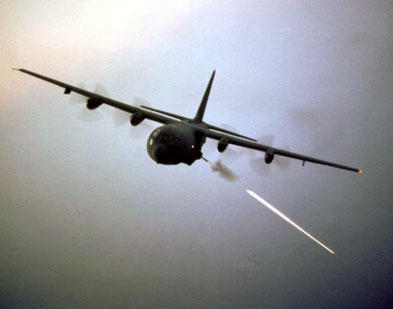
    Interestingly, the missile can be launched from unmanned drones and it may be used to equip the fearsome AC-130 Spectre, the "gunship" version of the Hercules transport aircraft. This mounts a range of formidable weapons, including a 105mm howitzer, linked to precision targeting systems. Discussing the latest version with one of its pilots, he told me that they use old cars on the range for target practice and, so accurate had the system become that they no longer designated just the car they would hit, but could tell you the window through which they would put the round.

    Elsewhere, enormous expense is being devoted to what is known as the "small diameter bomb" project, with $20 million already expended on research, for a 250lb bomb which will deliver with extreme precision a warhead of a mere 50lb, all in order to avoid the collateral damage often experienced with larger bombs.

    All this is a far cry from Unicef's "Smurficide" film, which shows a cluster of large bombs raining down on the village. In so far as it is possible for war to be "humane", the United States is doing everything it can to make it so, expending huge amounts of treasure in pursuit of that objective. That is all the more reason why Mugabe's slur is so utterly despicable and why this snide anti-American carping is so malign.

    COMMENT THREAD

    Sunday, 16 October 2005

    Boys' own

    In the week that there was some serious news about the march of defence integration, much of which has been covered in this blog, I see the Sunday Telegraph's "defence correspondent", Sean Rayment, has swung into action.

    But anyone who expected any intelligence from Sarah Sand's dumbed-down rag is going to be sadly disappointed. Rayment is offering us a really penetrating story about the US Army's decision to purchase high-speed backhoe loaders from JCB.

    In an excitable story, complete with a graphic which would not be out of place in a "Boys' Own" comic (above), Rayment tells us that the United States Army, "the world's most powerful military organisation," has unveiled its latest secret weapon in the war against terror - a JCB digger that can travel at 60 miles an hour.

    "Camouflaged to protect it from enemy fire (...er?) and equipped with machine-guns, armour, bullet-proof glass and smoke dispensers," he gushes, "this latest vehicle is the biggest, fastest and most expensive digger ever to go into production…. It is also equipped with 'run-flat' tyres, which will allow it to escape from ambushes even if the wheels are damaged by small arms fire, and is fitted with a second seat that will enable another soldier to ride 'shotgun'."

    Oh, p-leaze. Seekers after the truth can quickly find out from JCB's own website that the company has been awarded the contract, expected to be worth up to $140 million, for what is termed the "High Mobility Engineer Excavator" (HMEE) vehicle. The company helpfully publishes a photograph (right), which of course looks nothing like the Telegraph graphic, lacking for instance the fanciful "bull bar" and light clusters, which would actually be ripped off the moment the machine was used.

    It has been designed, says JCB, to meet the requirements specified by US Army TACOM for a backhoe loader capable of speeds up to 57 mph. The objective of the HMEE concept, it adds, is to have a machine capable of travelling at military convoy speed without the need for transportation by a truck and low-loader trailer. And, in a far cry from Rayment's puerile commentary, it tells us that "a fully armoured version is under discussion," itself nothing unusual. Armoured construction vehicles were around in the Second World War and are in daily use in hotspots such as Israel.

    Oddly enough, there is a serious story tucked underneath Rayment's drivel, by the same man, headed "Half the Army's combat vehicles 'unfit for war'." And from where does Rayment get this information? Ah! It actually emerged in response to Parliamentary questions from back-bencher Ann Winterton, the Tory MP for Congleton, Cheshire, to Adam Ingram, the Armed Forces minister.

    The information is part of a wider story that is being left to Tory back-benchers to pursue, in the absence of any activity from the Tory front bench. It reflects how the MoD is cutting back in hundreds of different and damaging ways in order to afford its profligate spending on re-equipping the Army to form part of the European Rapid Reaction Force.

    Fortunately, to tell us something about this, we have the paper's real defence correspondent, Christopher Booker writing in his column - in what has become, effectively, a paper within a paper. There is also a certain Richard North writing in The Business about how the government's "Europe first" policy is undermining Britain's defences.

    Those are the adult bits, leaving the "real" papers to do the "Boys' Own" stuff, which is about all they are fit for.

    COMMENT THREAD

    Thursday, 13 October 2005

    A succession of failures

    For anyone who wants an example of how a combination of useless MPs and the gross amateurism of the media can given a totally distorted view of a subject, go no further. Today's report from the Public Accounts Committee on "defence overspending" – mentioned in my earlier posting – would be very hard to beat.

    The report itself, available here is entitled, "Ministry of Defence: Major Projects Report 2004". To produce it, the committee – headed by Edward Leigh - examined the cost, time and technical performance in the year ended 31 March 2004 for the 20 largest MoD procurement projects where the main investment decision had been taken. It also examined the ten largest projects in the assessment phase.

    For the 20 largest projects, the MoD forecast the costs at £50 billion, an increase of £1.7 billion in the last year (compared to £3.1 billion in the previous year), bringing them to £5.9 billion over the target cost set at approval (or 13% of the total forecast set at approval). The 20 projects have also had further delays, totalling 62 months, to their expected delivery dates, bringing the cumulative delay to 206 months.

    Cumulatively, said the committee, these in-year cost increases and delays place additional pressures on an already-stretched defence budget and mean that the Armed Forces will not be getting the most effective capability at the right time. There will be further cuts or cancellations in equipment, and the Armed Forces will have to operate older, less-capable, less efficient equipment for longer.

    At face value, all of that looks good, critical stuff and what is said is not inaccurate. But it is childishly superficial.

    Firstly, the MPs took the MoD at its own face value, coming to its conclusions after taking written evidence solely from the MoD and oral evidence from two MoD officials. They did not look outside the loop, and seek wider views of the failures of the Department.

    Secondly, a failing shared with the Defence Select Committee, the MPs only looked at the situation "as is". In other words, they looked at the projects which the MoD was implementing and assessed its performance in dealing with them, in order to gauge whether money was being wasted. What it did not do was attempt to second-guess whether those projects should have been undertaken in the first place - whether they made the right choice of equipment and, if not, why not.

    This is especially significant in that the most expensive of the projects the committee looked at was the Type 45 Destroyer (pictured above) contract, which is costed out at £5 billion for six ships, despite the MoD's website stating that they cost £1 billion each.

    This is a contract we have looked at very closely on this blog and our conclusion is that the UK should never have attempted a unique, national design for such a small number of highly complex ships. That is the option the Australians chose, selecting a more capable US design, building the ships in their own yards at 60 percent of the UK costs.

    If that assertion is debatable, then at least it should be debated, and that represents the ultimate failure of the MPs – that willingness to take each decision "as is" without looking beyond it. But even following its own limited framework, the committee fails in its task. It is not always clear, it says:

    …whether changes to the scope of projects are the result of cost increases or changes to requirements or both. For example, it was originally planned to purchase 12 Type 45 destroyers when the project was approved in 2000. The Department is now planning to acquire only eight ships. The reduction in numbers was not attributable to any one factor but to a combination of getting greater capability from each destroyer; the need to contain costs after increases in parts of the project (mainly on the Principal Air-to-Air Missiles to be fitted to the destroyers); and the reduced threat from enemy aircraft and missiles.
    Leaping out from this verbiage is that crucial phrasing: "…the need to contain costs after increases in parts of the project", mainly on the Principal Air-to-Air Missiles (PAAM). Nowhere is this mentioned that this is a French designed and built missile, which is late, with the costs spiralling out of control. It was the insistence of the MoD that we kept PAAM that forced us to resort to a unique design in the first place, but there is no mention of that. But what it does remark is that:

    The Department aims to match appropriate procurement strategies to individual projects on a case-by-case basis. The different strategies employed include Private Finance Initiative / Public Private Partnerships, leasing, multi-nation collaborative programmes, partnering, and Alliancing. The decision to adopt a particular strategy will be affected by factors such as affordability, technological risk, and the possibilities of sharing technology, risks or rewards with industry or other nations. But different strategies carry different risks. The multi-nation collaborative route, for example, has often led to delays while other partner nations reach agreement on the Memorandum of Understanding or the contract.
    This, says the committee, has happened on the Eurofighter, the Meteor missile and the A400M heavy lift aircraft in each case resulting in significant time and cost overruns. But it also happened with the Type 45, which the committee does not include in its list.

    Putting this all together, some of the projects are indeed down to mismanagement, but much of the waste identified by the committee stems directly from the choice of European equipment. This is not "mismanagement" per se, but the effects of selecting the wrong suppliers or the wrong equipment in the first place. And this applies to other equipment, the procurement of which in the committee's terms, was not "mismanaged", but still cost more than it ought to, or was simply the wrong choice.

    Yet, when it comes to the media, they all report roughly the same thing. The Guardian picks up the theme of "overspending" and then follows the committee line that:

    The cost increases and delays will lead to "further cuts or cancellations in equipment, and the armed forces will have to operate older, less capable, less efficient equipment for longer", the Commons public accounts committee warns.
    Exactly the same line is taken by the BBC, which reports the MPs saying: "the armed forces may be left without vital equipment because of the Ministry of Defence's 'woeful' management of major procurement projects."

    And then there is the Telegraph which reports on "the woeful performance of the Department in procuring defence equipment and its inability even to follow its own broadly sensible procurement rules."

    This is not journalism – it is copy editing. The mindless hacks have simply edited the committee press release. Some have embellished it with a couple of quotes, and then they all have regurgitated the script and called it a news story.

    The point of course, is that the select committee have done a bad job in scrutinising the government. But, in a working democracy, the check on the poor performance of MPs is the media, which should have savaged the report. They have not, and therefore, as a result of this succession of failures, the government gets off the hook. No wonder it performs so badly.

    COMMENT THREAD
    Monday, 5 September 2005

    The realignment continues

    Last month, I posted a story about how Australia, militarily, was becoming more closely aligned with the United States, and slipping away from the orbit of the Euro-obsessed British. This was followed by a posting from my colleague on the nascent Anglosphere, which confirmed this dynamic.

    Now, from the The Australian comes yet further evidence in an article headed "Australia to share US secrets".

    US President Bush, it reports, has issued a decree changed US national disclosure policy, upgrading Australia to the highest rank of intelligence partner that the US has in the world. Australia's new status is equalled only by Britain and vastly expands the quantity and quality of US intelligence our agencies receive.

    In the 50 years of the US-Australia alliance, writes The Australian, Australia has never before enjoyed this level of access to American intelligence. The agreement ranges from tactical and operational military information through to comprehensive national assessments.

    Increasingly, Australian agencies will have direct access to US intelligence systems. Australian military personnel in the Middle East, for example, can already directly access US intelligence databases and real-time battle space imagery.

    The new relationship occurs at many levels. Canberra now has a permanent senior officer stationed at the US Strategic Command in Nebraska (pictured right). US Strategic Command is responsible for integrated intelligence, surveillance and reconnaissance, space and global strike operations, information operations, integrated missile defence and command and control.

    It is the most sensitive intelligence hub in the US military network and to have Australians stationed there at high levels of seniority is a sign of the depth of the intelligence relationship. Australia gains access at all levels - to US raw intelligence, to US assessments of the intelligence and to real-time operational information and planning.

    This has meant Australia further upgrading its own security because the US is extremely sensitive about who shares such information. Australia's new status is a sign of the growing trust the US has in the Australian military and intelligence community. Co-operation between Canberra and Washington in these fields has grown exponentially as a result of both the war on terror and the joint operations in Iraq.

    In an editorial today, The Australian elaborates on this development, declaring that the change in Australia's status shows the reserves of trust that exist with our major ally. It is also a testament to the close relationship between Mr Bush and John Howard (pictured left), adding that: "the US alliance is, of course, the foundation of our security. Less well understood is the way the huge US defence budget subsidises our own military and intelligence spending, making it easier for Australian governments to provide the social services we value."

    Continuing on this theme, it emphasises similar issues to those which have made the "special relationship" so valuable to the UK. "In recent times," the editorial says, "the closeness of this relationship, which is based on shared values and a history of helping each other out in times of conflict, has been expressed in many ways, including the free trade agreement signed last year and Australia's commitment to the liberation and rebuilding of Iraq. The new intelligence symbiosis, which among other things will help us fight terror in our region, is a further example of how the US alliance materially benefits Australia."

    That "symbiosis" may be helping Australia now but, as far as the UK is concerned, informed sources report to us that British defence companies are experiencing "severe difficulties" in obtaining sensitive information from the US, suggesting that, far from enjoying equal status with Britain, in fact, Australia is now in a more privileged position.

    This can hardly be a surprise. Amongst the more dubious articles of the "secret treaty" which we highlighted last month is "mutual recognition" of security clearances for the personnel from the signatory states.

    Thus, according to the innocuous-sounding "Framework agreement" concerning measures to facilitate the restructuring and operation of the European defence industry, Part 4 (Article 23) defence workers from France, or Germany or German or any other of the signatory nations who have been given security clearance by their own country can be allowed full access to British defence secrets, and without even the British authorities having to be notified.

    There plenty of examples of US sensitive technology having leaked from European firms to China, so there can be no surprise that things are getting tougher for Britain. As we cannot even control access to our own secrets, why should the Americans trust us? But, when Australia is cementing serious relationships with the US, and we are left out in the cold, it really is time to ask where we are going. Can we really afford to accept an Anglosphere that excludes the UK?

    COMMENT THREAD